

Hollywood Regency Interior Design: The Glamorous Style Taking Over Homes in 2026
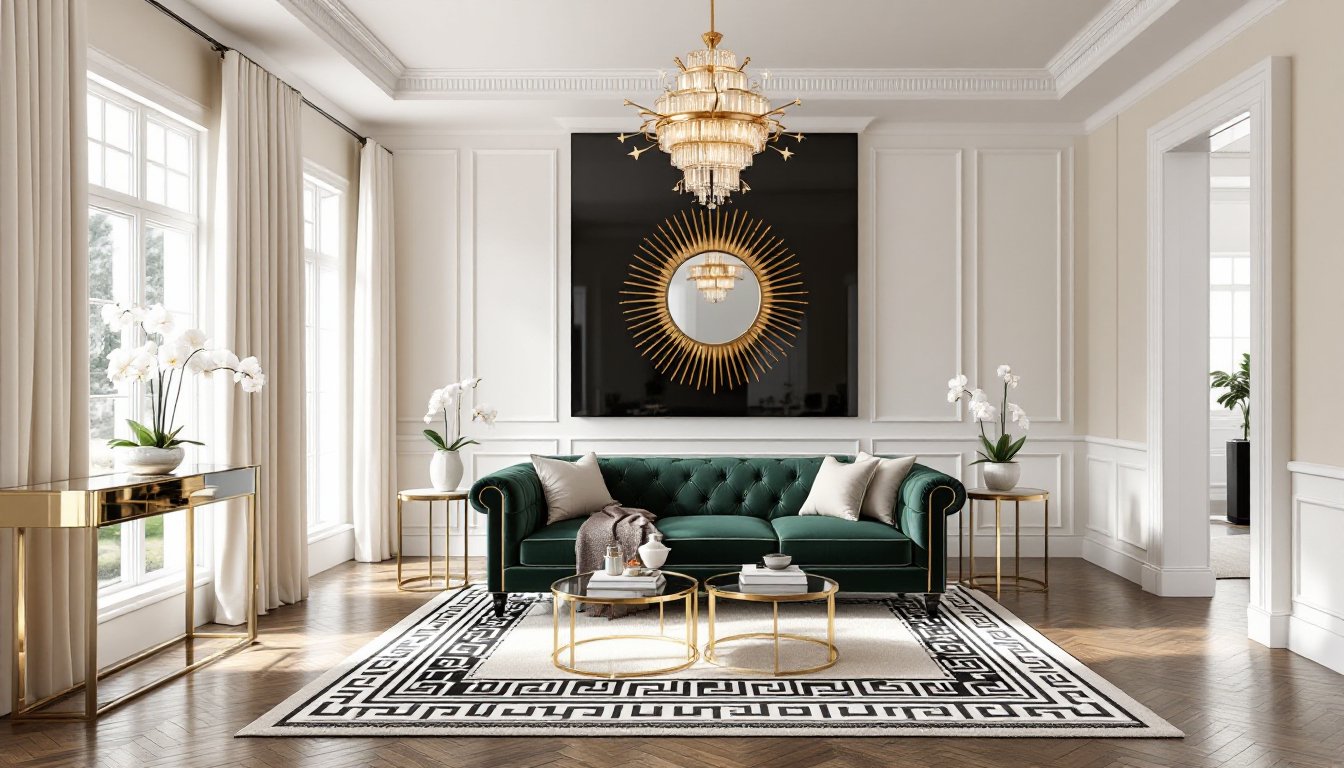
Hollywood Regency isn’t just a décor trend, it’s a full-throttle commitment to glamour, drama, and unapologetic luxury. Born in the Golden Age of cinema and now resurfacing as one of 2026’s hottest design movements, this style blends high-contrast color, metallic finishes, and bold geometry with a confidence that demands attention. Unlike minimalist trends that whisper, Hollywood Regency shouts. It’s plush velvet against lacquered walls, geometric mirrors reflecting candlelight, and furniture that looks like it belongs on a movie set. For homeowners ready to move past safe neutrals and embrace something theatrical, this style offers a roadmap, but it requires precise execution, quality materials, and a willingness to go bold.
Key Takeaways
- Hollywood Regency interior design combines high-contrast colors, metallic finishes, and bold geometry to create dramatic, luxe spaces that demand investment in quality materials and skilled installation.
- The style’s core elements—tufted velvet upholstery, mirrored furniture, statement lighting, and lacquered finishes—work together as a carefully composed whole rather than random luxury pieces.
- Start with a single hero piece like a jewel-toned velvet sofa or oversized geometric mirror, then layer supporting elements like high-gloss paint, metallic hardware, and dramatic window treatments.
- Modern Hollywood Regency adapts the classic style with brushed brass finishes, performance fabrics, sustainable vintage pieces, and smart lighting to suit contemporary lifestyles without sacrificing glamour.
- Proper execution requires meticulous prep work: walls must be perfectly smooth for gloss finishes, mirrors need heavy-duty anchors, and fabric choices should prioritize durability (velvet with 30,000+ Martindale rub count for high-traffic areas).
- Renters and apartment dwellers can embrace Hollywood Regency through removable wallpaper, peel-and-stick mirror tiles, swappable hardware, and statement furniture that travels without permanent modifications.
What Is Hollywood Regency Interior Design?
Hollywood Regency emerged in the 1930s and ’40s when Hollywood set designers like Dorothy Draper and William Haines translated the opulence of film sets into residential interiors. The style borrowed heavily from Art Deco, neoclassical design, and mid-century modernism, creating a hybrid that prioritized visual impact over practicality.
At its core, Hollywood Regency is about controlled extravagance. It layers luxe materials, lacquer, brass, mirror, velvet, with clean lines and symmetry. Unlike maximalism, which piles on pattern and color with abandon, Hollywood Regency maintains structure. Every gilded accent and jewel-toned pillow serves a compositional purpose.
The style thrives on contrast: black and white checkerboard floors, chrome against matte black walls, or a tufted pink sofa anchoring an otherwise neutral room. It’s theatrical without tipping into costume, glamorous without feeling dated.
This isn’t a forgiving style for renters or flip projects. It demands commitment, high-gloss paint (which shows every wall imperfection), custom upholstery, and statement lighting that often requires upgraded electrical boxes or ceiling reinforcement. Homeowners considering Hollywood Regency should be ready to invest in both materials and skilled installation.
Key Characteristics of Hollywood Regency Style
Bold Color Palettes and Metallic Accents
Hollywood Regency color schemes break the rules most designers follow. High-contrast pairings dominate: black and white, navy and gold, emerald and brass, or fuchsia and silver. These aren’t subtle gradients, they’re hard stops that create visual tension.
Metallic finishes are non-negotiable. Brass, chrome, nickel, and gold appear on everything from cabinet hardware to mirror frames to table bases. When selecting metallic finishes, homeowners should commit to one or two metal tones per room to avoid a cluttered look. Mixing warm brass with cool chrome can work, but it requires careful balance, too many finishes read as indecisive rather than eclectic.
High-gloss paint and lacquered furniture amplify light and add depth. A semi-gloss or gloss acrylic enamel (Sherwin-Williams Emerald Urethane or Benjamin Moore Advance) works well for trim and furniture, but walls require proper prep: skim coating, sanding to 220-grit, and priming are mandatory. Any drywall imperfection will telegraph through gloss finishes.
Metallic wallpaper, especially geometric or Greek key patterns, adds texture without softening the look. When installing metallic or foil wallpapers, use a heavy-duty vinyl adhesive and ensure walls are perfectly smooth: these materials are unforgiving.
Luxurious Textures and Statement Furniture
Hollywood Regency furniture looks expensive because it usually is. The style favors tufted velvet sofas, lacquered credenzas, mirrored dressers, and acrylic or brass accent tables. Silhouettes lean neoclassical, think Greek klismos chairs, X-base benches, and barrel-back club chairs.
Velvet is the go-to upholstery fabric, but not all velvet wears the same. Look for 100% cotton velvet or polyester performance velvet with a Martindale rub count above 30,000 for high-traffic areas. Velvet crushed or flattened by use can be revived with a steamer, but cheaper blends pill and fade.
Mirrored furniture, nightstands, console tables, dressers, is a hallmark of the style. These pieces are heavy (a mirrored dresser can weigh 150+ pounds) and fragile. Installation requires wall anchors rated for at least 100 pounds if securing to drywall, and homeowners should avoid placing them in high-humidity areas like bathrooms where the mirror backing can deteriorate.
Statement lighting is critical. Chandeliers, Sputnik fixtures, or tiered glass pendants serve as focal points. Many vintage-inspired fixtures use candelabra (E12) bulbs: confirm the electrical box is rated for the fixture’s weight and consider a ceiling brace retrofit (available at any hardware store) for fixtures over 50 pounds.
Animal prints, zebra, leopard, faux fur, appear sparingly, usually as accent pillows, throws, or a single upholstered ottoman. Overuse turns the room into a costume.
How to Incorporate Hollywood Regency Into Your Home
Start with one hero piece: a tufted velvet sofa in jewel tones, a brass bar cart, or a large geometric mirror. Hollywood Regency works best when a single element commands attention and the rest of the room supports it.
Paint is the fastest transformation. A high-gloss black accent wall or lacquered built-ins instantly shift the room’s tone. For DIYers, Benjamin Moore Advance or Sherwin-Williams ProClassic in semi-gloss or gloss finishes provide durability and sheen. Apply at least two coats over a stain-blocking primer (especially over existing dark colors) and use a fine-finish roller or foam roller to minimize texture.
Mirrors amplify the effect. Oversized, geometrically framed mirrors, sunburst, Greek key, or beveled glass, create the illusion of more space and bounce light. Hang mirrors across from windows or light sources, and use heavy-duty wall anchors or toggle bolts into studs. A 40-pound mirror needs at least two anchors rated for 50+ pounds each.
Upgrade hardware and fixtures. Swapping builder-grade brushed nickel for brass cabinet pulls, crystal knobs, or lucite handles changes the room’s vibe without major construction. When replacing hardware, measure center-to-center spacing on existing holes to avoid drilling new ones.
Layering rugs adds luxury. A high-pile shag or faux fur rug over hardwood, or a bold geometric pattern layered atop sisal or jute, creates depth. Ensure the bottom rug has a non-slip pad: layering without it creates a tripping hazard.
Window treatments should be dramatic: floor-to-ceiling drapes in silk or velvet, mounted as close to the ceiling as possible and extending several inches beyond the window frame on each side. Use traverse rods for functional drapes or decorative rods in brass or lucite for stationary panels. Install brackets into studs or use heavy-duty anchors, velvet drapes are heavy, especially when lined.
Avoid DIY errors like undersized rugs (at least the front legs of all furniture should sit on the rug), overhead lighting as the sole source (layer with table lamps and sconces), or matching furniture sets (Hollywood Regency thrives on curated eclecticism, not catalog coordination).
Modern Hollywood Regency: Adapting the Style for Today
Modern interpretations dial back the gilt without losing the glamour. Instead of solid brass, try brushed brass or matte black finishes. Swap all-white lacquer for navy, charcoal, or deep green to add warmth. Performance fabrics, stain-resistant velvets and outdoor-grade metallics, make the look livable for families and pet owners.
Sustainable swaps are increasingly common. Vintage or secondhand lacquered furniture often needs only light restoration, cleaning with Murphy Oil Soap and buffing with paste wax can revive a finish. Faux fur and recycled polyester velvet mimic luxury textures without the environmental cost.
Smart lighting integrates seamlessly. Chandeliers with dimmable LED candelabra bulbs (look for 90+ CRI for accurate color rendering) offer control without sacrificing style. Philips Hue or LIFX smart bulbs in E26 bases work in table lamps and sconces, allowing color temperature shifts from warm amber to cool white.
Open floor plans challenge Hollywood Regency’s reliance on symmetry, but area rugs, furniture arrangement, and lighting zones can define spaces. Use a bold rug to anchor the living area, a bar cart or console to divide the dining zone, and matching table lamps on either side of a sofa to create visual balance.
In smaller homes or apartments, focus on fewer, higher-impact pieces. A single mirrored accent wall (using peel-and-stick mirror tiles or professional installation of glued mirror panels) visually expands space. One statement chandelier or a pair of brass sconces flanking a mirror delivers the look without overwhelming square footage.
Renters can embrace the style with removable wallpaper (brands like Tempaper or Spoonflower offer metallics and geometric patterns), freestanding mirrors, swappable hardware (save the originals), and furniture that travels. Avoid permanent changes like high-gloss wall paint or hardwired lighting that require restoration on move-out.
Conclusion
Hollywood Regency demands confidence, it’s not a style for the cautious or the budget-conscious. But for homeowners ready to commit to bold color, luxe materials, and a little drama, it delivers rooms that feel cinematic and curated. Start with one anchor piece, invest in quality materials, and don’t skip the prep work. The payoff is a space that doesn’t just look expensive, it looks intentional.