

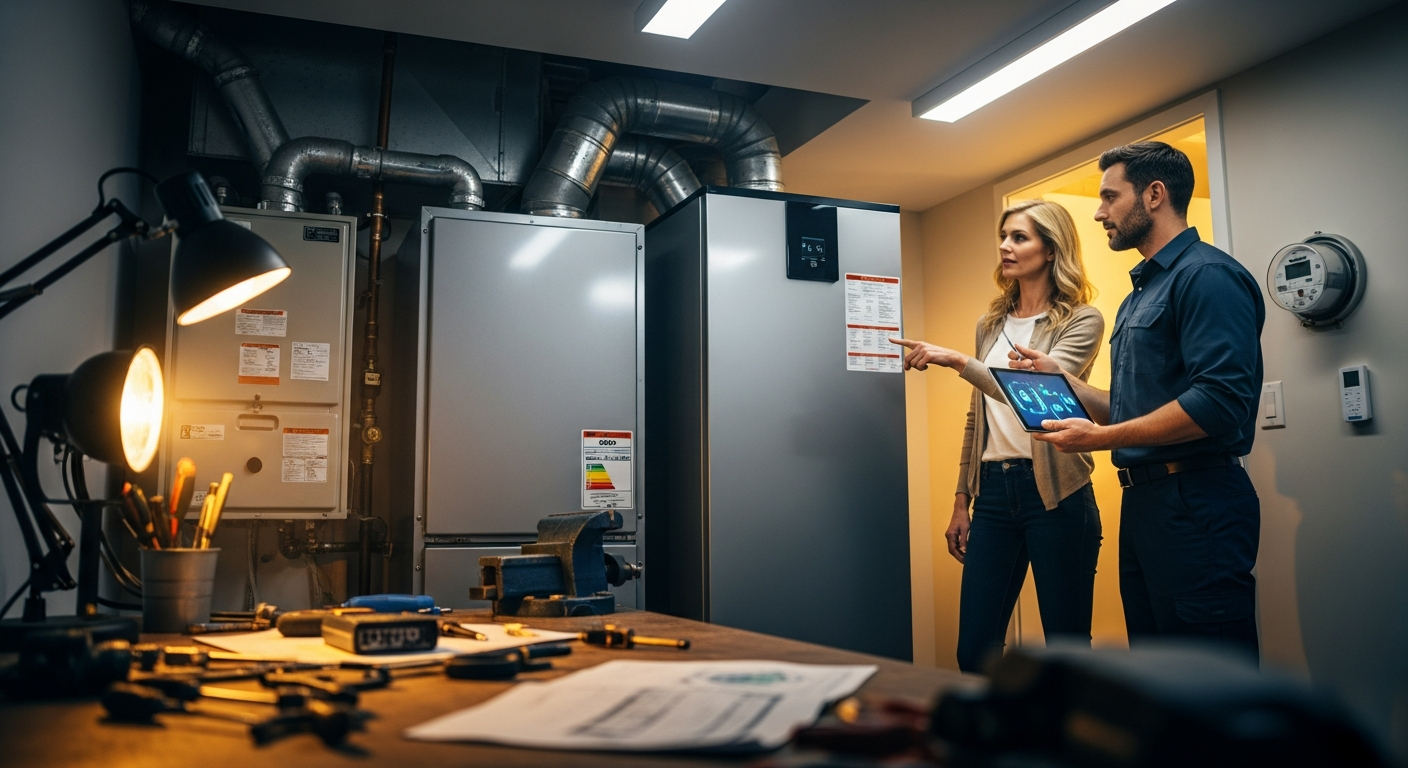
The Homeowner’s Guide to Upgrading Your Heating System for Better Comfort and Lower Bills
There’s a unique comfort in the quiet, steady hum of a reliable heater on a frosty morning, a sound that promises warmth and sanctuary. Conversely, there’s a special kind of dread that accompanies the sudden, worrying silence when an old system gives out completely. Homeowners are navigating the twin pressures of rising energy costs and a growing desire for a more sustainable, comfortable home. Many are seeking home energy upgrades that can significantly lower energy bills and support personal sustainability goals. This guide is designed to transform the process of choosing a new heating system from a stressful chore into a thoughtful step toward creating a cozier, more efficient, and peaceful haven. We will walk you through everything you need to know, simply and clearly, to make a confident choice for your home’s future.
Decoding Your Current System: Signs It’s Time for a Change
Before you can choose a new path, it’s important to understand where you currently stand. Assessing your existing heating system isn’t about being an expert; it’s about listening to the clues your home is giving you. This section will help you interpret those signs with confidence, providing the why behind a potential upgrade. Think of it as practical advice from a trusted friend who has been through this exact process and understands the importance of making an informed decision before an emergency strikes.
Listening to Your Home: Telltale Signs of a Failing System
Your home often provides subtle—and sometimes not-so-subtle—cues that its heating system is struggling to keep up. Recognizing these signs allows you to plan a heating and cooling repair Bradford or replacement on your own terms. A key indicator is the system’s age; most furnaces have a lifespan of 15-20 years, and if yours is approaching that milestone, planning is a wise financial move. Another classic sign of declining efficiency is a noticeable spike in your utility bills, even though your usage patterns haven’t changed, which is a clear signal that your unit is working harder to produce the same amount of heat. The U.S. Department of Energy estimates that upgrading a dated system can reduce heating energy use by 20% to 50%. Pay attention to uneven temperatures, such as cold spots or entire rooms that never feel warm enough, as these points to poor performance. Strange noises like banging, rattling, or excessive groaning are mechanical cries for help, while frequent repair calls mean the money spent on fixes could be better invested in a new, reliable unit.
The Language of Heating: Key Terms to Know
The world of home heating comes with its own vocabulary, but it’s far less intimidating than it seems. Understanding a few key terms will empower you to have knowledgeable conversations with technicians and make a choice that truly fits your needs. Here are the essentials, broken down into simple, non-jargon definitions.
- AFUE (Annual Fuel Utilization Efficiency): Think of this like a grade for your furnace’s efficiency. An AFUE of 95% means that for every dollar you spend on fuel, 95 cents is converted into heat for your home. Modern high-efficiency furnaces can achieve impressive AFUE ratings of 95% to 97%, representing a significant improvement over older models.
- BTU (British Thermal Unit): This is simply a standard measurement of heat output. A professional will calculate the correct BTU capacity needed for your home based on its size, layout, and insulation. Getting this right is crucial—too many BTUs, and you’ll waste energy with short cycles, while too few means the system will run constantly without ever reaching a comfortable temperature.
- HVAC (Heating, Ventilation, and Air Conditioning): This is the umbrella term for all the systems that manage your home’s climate. When you upgrade your heater, you are making a critical improvement to your overall HVAC system, which is essential for maintaining consistent temperatures and good air quality throughout your home.
- Heat Pump: This is an incredibly efficient, all-in-one alternative that heats your home in the winter and cools it in the summer. Instead of burning fuel, it moves heat. Their popularity is surging as homeowners prioritize sustainability, with one realtor noting that homeowners are rushing to install them due to their remarkable efficiency.
The Modern Heating Showdown: Furnaces and Heat Pumps Explained
As you prepare for an upgrade, you’ll likely find yourself choosing between two primary modern options: a high-efficiency gas furnace or an all-electric heat pump. Both technologies have advanced significantly in recent years, offering levels of comfort and efficiency that were unheard of a generation ago. The goal of this section is to clearly present the features and benefits of each, helping you understand which might be a better fit for your climate, home, and long-term financial goals.
The Enduring Warmth of the Modern Furnace
Today’s furnaces are a world away from the energy-guzzling models of the past. They are engineered for precision, quiet operation, and remarkable fuel efficiency. The biggest evolution has been in how they modulate their output, which is categorized in stages. While a single-stage furnace is the classic on/off model that always runs at full blast, a two-stage furnace is a smarter and more popular option. It has two levels of output: a low setting for milder days and a high setting for deep winter cold. A two-stage furnace typically runs on its lower, energy-saving setting about 75-80% of the time, which can reduce energy consumption by 10-20% compared to single-stage units. This also makes it significantly quieter; instead of a loud roar, its operation is often compared to the noise level of a quiet library, around 40-60 decibels.
The Rise of the All-in-One Heat Pump
The heat pump is increasingly seen as the innovative, eco-friendly champion of modern home climate control. Its operation is elegantly simple: it doesn’t create heat from fuel but instead uses electricity to move existing heat from the outside air into your home. This process is remarkably efficient; while a top-tier gas furnace might achieve 97% efficiency, a heat pump can reach an equivalent efficiency of 400% because it moves heat rather than generating it. One of their most significant advantages is that they are an all-in-one system, providing both heating in the winter and air conditioning in the summer. As homeowners prioritize sustainability, heat pumps are becoming a key technology for reducing a home’s carbon footprint. Recent studies have even confirmed their effectiveness in providing climate-friendly heating even in older, less-insulated buildings, and their adoption is a key part of decarbonization efforts.
At a Glance: Furnace vs. Heat Pump
Choosing between a furnace and a heat pump depends heavily on your climate, budget, and energy priorities. Both are strong choices, but they’re best suited to different situations. This table provides a clear, side-by-side comparison to help you weigh the most important factors for your household.
| Feature | High-Efficiency Gas Furnace | Modern Heat Pump |
| Best Climate | Excellent for extremely cold climates where temperatures consistently drop far below freezing. | Ideal for moderate to cold climates. Newer cold-climate models are effective in colder regions. |
| Upfront Cost | Generally lower initial installation cost. | Typically higher initial cost, but this is changing with rebates and incentives. |
| Energy Source | Natural gas or propane. | Electricity. Can be paired with solar panels for maximum sustainability. |
| Efficiency | High: 95-97 % AFUE. | Extremely High: 200-400% efficiency rating (HSPF). Reduces carbon pollution by approximately 93%. |
| Functionality | Heating only. Requires a separate air conditioner for cooling. | Provides both heating and cooling in one unit. |
| Long-Term Cost | Dependent on fluctuating natural gas prices. | Lower operating costs due to high efficiency can lead to significant savings on utility bills, with some homeowners saving $300 to $650 per year. |
Your Framework for a Confident and Cost-Effective Decision
With a solid understanding of the technology, it’s time to apply that knowledge to your unique situation. This final section provides a practical framework to guide you through the last steps of the decision-making process. Moving from technical specifications to real-world applications will empower you to select a system that not only works efficiently but also perfectly suits your home and lifestyle, turning your living space into the sanctuary you deserve.
Sizing Your System for Your Sanctuary
One of the most critical factors in any HVAC upgrade is ensuring the system is correctly sized for your home. A system that is too large will turn on and off frequently—a process known as short cycling—which wastes energy, creates uneven temperatures, and puts excessive wear on components. A system that’s too small will run constantly, struggling to keep your home comfortable while driving up your energy bills. To avoid these issues, you should insist that any potential installer perform a professional Manual J load calculation. This detailed analysis considers factors beyond mere square footage, including your home’s layout, window types, insulation levels, and local climate to determine the precise heating load your home requires.
Considering Your Climate and Your Home’s Unique Needs
Ultimately, the best heating system is a personal choice tailored to your environment. A homeowner in a mild climate will have different needs than someone who regularly faces deep freezes. Furthermore, the performance of any new HVAC system is directly tied to your home’s envelope—its insulation, windows, and air sealing. As experts suggest, upgrading insulation and windows can be just as important as the heating unit itself for improving comfort and efficiency. In fact, research has shown that retrofitting older homes with better insulation and modern systems yieldssignificant benefits for the environment and sustainability.
Navigating Costs, Rebates, and Long-Term Value
Don’t focus on the price sticker—consider the total cost of ownership. While more advanced systems like a two-stage furnace can cost $500 to $1,000 more upfront than a basic model, the long-term energy savings often pay for that difference over several years. To help offset these initial costs, be sure to research available incentives. Many federal, state, and provincial governments, along with local utility companies, offer significant rebates and tax credits for installing high-efficiency systems. Programs such as the federal Household Energy Upgrades Fund are emerging to offerdiscounted financing for energy-efficient retrofits, while regional initiatives in areas likeOntario andthe UK are actively encouraging these upgrades. These incentives can dramatically reduce the net cost of a new furnace or heat pump, making the best technology more accessible.
Creating Your Home’s Warmest, Wisest Future
Choosing a new heating system is far more than a simple appliance replacement; it’s a significant investment in your family’s daily comfort, your long-term financial well-being, and the overall health of your home environment. By taking the time to understand the signs from your current system, learning the language of modern heating technology, and carefully assessing your home’s unique needs, you are empowered to make a choice that will deliver quiet, efficient, and reliable warmth for years to come. You are not just buying a machine; you are thoughtfully curating the future comfort and peace of your personal haven.
Now that you’re equipped with this knowledge, what’s the first step you’ll take toward creating a cozier, more efficient home? Share your thoughts in the comments below!