

Japandi Interior Design: The Ultimate Guide to Blending Japanese and Scandinavian Style in 2026
Japandi interior design fuses the calm minimalism of Japanese aesthetics with the cozy functionality of Scandinavian style. It’s not a decorating trend that cycles out every few years, it’s a balanced approach to living spaces that emphasizes natural materials, clean lines, and purposeful simplicity. Homeowners drawn to Japandi appreciate rooms that feel both uncluttered and warm, where every piece serves a function without sacrificing beauty. This guide walks through the principles, materials, and room-by-room strategies that make Japandi work, along with the common pitfalls that turn a thoughtful space into a bland one.
Key Takeaways
- Japandi interior design fuses Japanese minimalism and Scandinavian coziness to create spaces that are both serene and livable, emphasizing natural materials, clean lines, and purposeful simplicity.
- Core principles of Japandi style include functional minimalism, natural craftsmanship, balance between warmth and restraint, and connection to nature through light, plants, and organic elements.
- Japandi spaces benefit from a neutral color palette of off-white, beige, greige, and warm taupe, accented with muted terracotta, charcoal, and sage green for visual interest without overwhelming the room.
- Furniture in Japandi design sits low to the ground with clean joinery, featuring light or dark natural woods, minimal hardware, and no excessive ornamentation to maintain an uncluttered aesthetic.
- Common Japandi mistakes to avoid include over-minimizing (which eliminates warmth), mixing too many wood tones, poor lighting layers, choosing trendy pieces over timeless quality, and neglecting texture and tactile contrast.
- Successful Japandi design prioritizes quality, intentional pieces and negative space over quantity, creating rooms that support daily function while maintaining aesthetic balance across living rooms, bedrooms, kitchens, and bathrooms.
What Is Japandi Interior Design?
Japandi interior design merges two design philosophies that share surprising common ground: Japanese wabi-sabi (embracing imperfection and transience) and Scandinavian hygge (comfort and coziness). Both traditions prioritize natural light, quality craftsmanship, and minimal clutter, but they approach warmth differently. Scandinavian design leans into soft textiles and light wood tones to combat long, dark winters. Japanese design favors darker woods, handmade ceramics, and a quieter palette that reflects Zen principles.
The term “Japandi” emerged in the 2010s as designers recognized these overlaps and began blending elements deliberately. A Japandi room typically features low-profile furniture, neutral earth tones, plenty of negative space, and natural materials like oak, linen, and stone. It’s less stark than pure minimalism and more disciplined than Scandinavian maximalism.
Core Principles of Japandi Style
Japandi rests on four foundational principles:
Functional minimalism: Every item in the room should have a clear purpose. Decorative objects are kept to a few carefully chosen pieces, a ceramic vase, a single piece of wall art, or a handwoven basket. Open surfaces and clean lines dominate.
Natural materials and craftsmanship: Wood, stone, bamboo, linen, and wool are the backbone. Furniture should showcase visible grain, honest joinery, and thoughtful construction. Avoid laminate, plastic, or anything that hides its material origins.
Balance between warmth and restraint: Scandinavian hygge brings in soft throws, cushions, and warm lighting. Japanese wabi-sabi introduces handmade textures, asymmetry, and darker accents. The goal is a space that feels inviting without becoming cluttered or overly busy.
Connection to nature: Large windows, indoor plants, and natural light are essential. In rooms with limited windows, designers use shoji-inspired screens, rice paper shades, or light-filtering linen curtains to soften incoming light and maintain a calm atmosphere.
Essential Color Palettes and Materials
Japandi color palettes stay firmly in the neutral zone but avoid sterile grays. The foundation is typically off-white, beige, greige, or warm taupe on walls and large surfaces. Accent colors include muted terracotta, charcoal, sage green, and soft black. High-contrast elements, like a matte black light fixture against a light oak shelf, create visual interest without disrupting calm.
For materials, prioritize:
- Light woods: White oak, ash, and beech (common in Scandinavian furniture) bring brightness and subtle grain.
- Dark woods: Walnut and teak (Japanese favorites) add depth and richness without heaviness.
- Stone and concrete: Honed or matte finishes work better than polished. Think limestone, travertine, or poured concrete floors with radiant heat.
- Textiles: Linen for curtains and upholstery, wool or jute for rugs, cotton for bedding. Avoid synthetics and high sheen.
- Metals: Brushed brass, matte black steel, or natural iron. Keep hardware minimal and hardware finishes consistent throughout the home.
Paint coverage for most low-VOC interior paints runs about 350–400 square feet per gallon depending on porosity. For Japandi walls, a single accent wall in charcoal or warm gray can anchor a room without overwhelming it.
Furniture and Decor Choices That Define Japandi
Japandi furniture sits low to the ground, features clean joinery, and avoids ornamentation. Look for:
- Platform beds with solid wood frames and no headboard, or simple upholstered headboards in linen.
- Low-profile sofas with wooden legs and neutral cushions. Avoid tufting, ruffles, or excessive pillows.
- Dining tables in light or medium wood with straight or slightly tapered legs. Benches work as well as chairs and save visual space.
- Storage that hides clutter: closed cabinets, built-in shelving, or wooden credenzas. Open shelving is acceptable if it’s styled minimally, a few books, a ceramic bowl, a small plant.
- Lighting that layers ambient, task, and accent sources. Pendant lights in paper, linen, or woven rattan add warmth. Floor lamps with tripod bases or arc designs provide task lighting without visual bulk.
Decor should be sparse and intentional. A single piece of wabi-sabi pottery with a visible crack or glaze imperfection has more impact than a shelf full of mass-produced items. Incorporate live plants like pothos, snake plants, or fiddle-leaf figs in simple ceramic or concrete planters. Avoid loud patterns, if using textiles with prints, stick to subtle stripes, checks, or organic motifs.
How to Create a Japandi Space Room by Room
Living Room
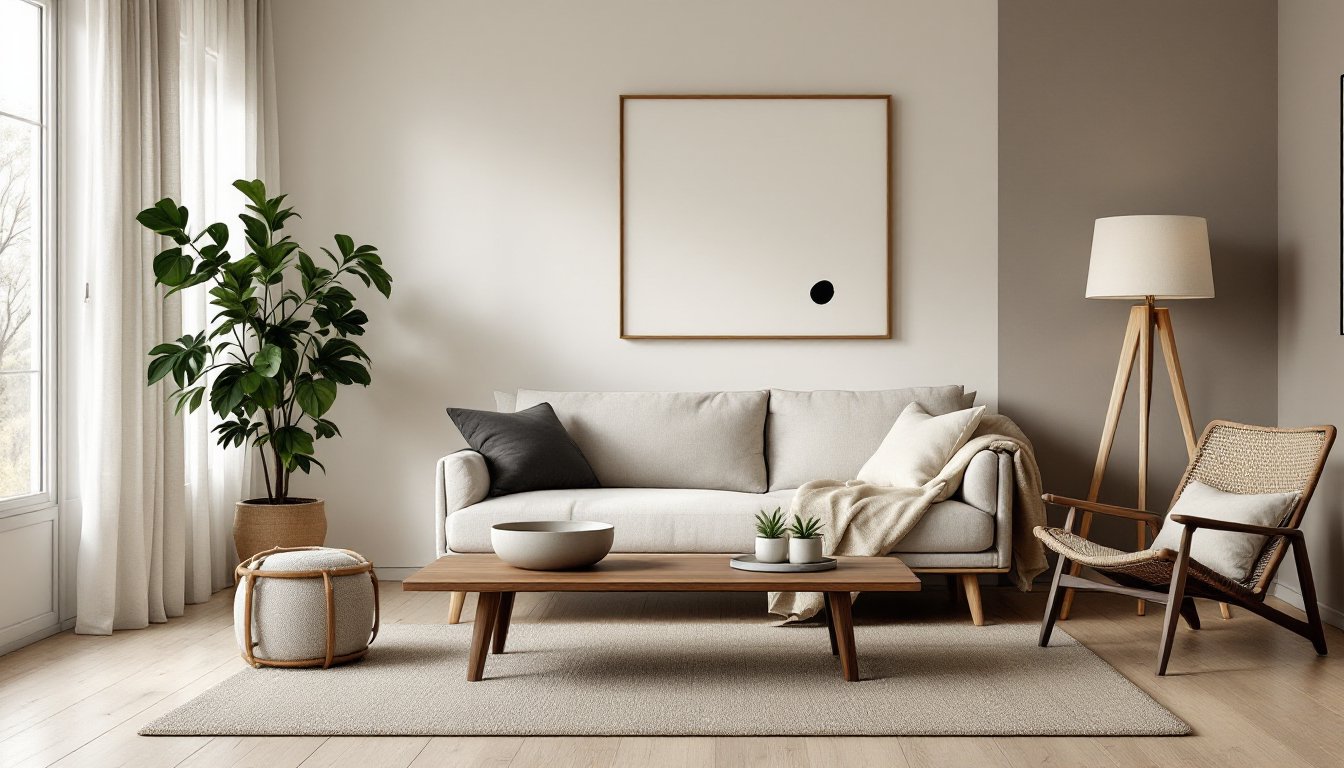
Start with a neutral base: light wood floors (or luxury vinyl plank in oak or ash finish), off-white walls, and a low wool or jute area rug. Choose a sofa with exposed wood legs and clean lines. Add a solid wood coffee table, round or rectangular, and a single accent chair in a darker tone or contrasting texture. Layer lighting with a paper pendant overhead, a floor lamp for reading, and dimmable recessed lights. Keep surfaces clear except for one or two curated objects.
Bedroom
A platform bed in white oak or walnut anchors the room. Use linen or cotton bedding in beige, charcoal, or soft gray. Nightstands should be simple, one or two drawers, no hardware, or minimal pulls. Blackout linen curtains maintain privacy while diffusing morning light. A single piece of wall art, black ink on paper or a framed textile, provides a focal point. Avoid dressers if possible: built-in closets or a low credenza keep the space open.
Kitchen
Flat-panel cabinetry in matte white, light oak, or charcoal sets the tone. Solid wood or butcher block countertops bring warmth, though honed quartz or concrete works if wood isn’t practical. Open shelving for everyday dishes keeps things accessible but requires discipline to avoid clutter. Matte black or brushed brass hardware, if any, should be minimal. A single pendant over the island or dining area, plus under-cabinet LED strips, handles task lighting. Swap out colorful appliances for stainless, white, or paneled models that blend into cabinetry.
Bathroom
Terracotta or concrete-look tile on floors, with white or light gray walls. A floating vanity in light wood with an integrated sink keeps lines clean. Matte black or brushed brass fixtures add contrast. Use linen hand towels and a simple woven basket for storage. A freestanding soaking tub, if space allows, reinforces the Japandi emphasis on mindful, unhurried routines.
Common Mistakes to Avoid in Japandi Design
Over-minimizing: Stripping a room down to nothing kills the warmth Japandi is known for. A few well-chosen textiles, plants, and handmade objects keep the space from feeling cold.
Mixing too many wood tones: Stick to two or three wood finishes max. Combining light oak, dark walnut, and medium cherry in the same room creates visual chaos.
Ignoring lighting layers: A single overhead fixture isn’t enough. Japandi spaces need ambient light, task lighting, and accent lighting to feel balanced and functional.
Choosing trendy over timeless: Japandi works because it avoids fast-changing trends. Stick with solid, well-made furniture that will last a decade or more. Avoid particleboard or anything that looks disposable.
Skipping texture: All-smooth surfaces, polished floors, glossy paint, slick fabrics, flatten the design. Japandi thrives on tactile contrasts: rough linen against smooth wood, matte stone next to woven baskets.
Forgetting function: A beautiful room that doesn’t support daily life isn’t Japandi. Ensure adequate storage, comfortable seating, and practical surfaces before worrying about aesthetics.
Conclusion
Japandi interior design offers a middle path between austerity and clutter, blending the best of Japanese and Scandinavian traditions into spaces that feel both serene and livable. It’s not about following a rigid checklist, it’s about choosing quality materials, respecting negative space, and letting each room breathe. Start with one room, focus on natural materials and intentional choices, and build from there.