

Sustainable Interior Design Materials: Transform Your Space the Eco-Friendly Way
Choosing sustainable interior design materials isn’t just about feeling good, it’s about building smarter. Conventional materials often contain harmful chemicals, contribute to landfill waste, and deplete finite resources. Eco-friendly alternatives offer the same durability and aesthetic appeal while reducing environmental impact and improving indoor air quality. From reclaimed wood to low-VOC finishes, homeowners can make choices that serve both their families and the planet. This guide covers practical, proven materials that work in real-world projects, not just design magazines.
Key Takeaways
- Sustainable interior design materials reduce harmful VOC emissions, lower health risks, and improve indoor air quality while offering comparable durability and aesthetics to conventional options.
- Natural fiber textiles like organic cotton, linen, hemp, and wool provide eco-friendly alternatives to synthetic fabrics when certified with standards like GOTS or FSC.
- Reclaimed wood delivers authentic character and eliminates demand for virgin timber, though sourcing from reputable suppliers and testing for pre-1978 lead paint is essential.
- Sustainable flooring options including bamboo, cork, linoleum, and reclaimed wood offer performance advantages and cost savings over their 20–30 year lifespan compared to cheaper alternatives.
- Low-VOC and zero-VOC paints are now mainstream with modern performance standards, costing only $10–$20 more per gallon than conventional paints while providing significant health and environmental benefits.
- Sustainable countertop materials like recycled glass, paper composites, and concrete-based surfaces provide durable, stylish alternatives that balance eco-credentials with real-world kitchen performance.
Why Sustainable Materials Matter in Interior Design
Traditional building materials come with hidden costs. Volatile organic compounds (VOCs) off-gas from paints, adhesives, and composite wood products for months or even years after installation, contributing to poor indoor air quality and health issues like headaches and respiratory irritation. Harvesting virgin timber, mining stone, and manufacturing synthetic finishes consume enormous energy and generate waste.
Sustainable materials address these problems head-on. They typically contain fewer or no VOCs, use recycled or rapidly renewable resources, and often require less energy to produce. Many also offer superior longevity, reclaimed wood has already survived decades, proving its durability.
Beyond health and environmental benefits, these materials often carry compelling aesthetics. Reclaimed barn siding brings character no factory floor can replicate. Natural fiber rugs add texture that synthetic versions struggle to match. And as demand grows, prices have become increasingly competitive with conventional options.
Homeowners should also consider lifecycle impact. A cheaply made laminate floor might cost less upfront but could require replacement in five years, while a quality bamboo floor can last 25 years or more with proper care. That calculation changes the economics significantly.
Natural Fiber Textiles and Fabrics
Natural fibers offer a straightforward swap for synthetic upholstery, curtains, and rugs. Organic cotton, linen, hemp, and wool are all grown with fewer pesticides and processed without the harsh chemicals common in polyester or nylon production.
Organic cotton works well for curtains and casual upholstery. It’s soft, breathable, and machine-washable, though it wrinkles more than synthetic blends. Look for GOTS (Global Organic Textile Standard) certification to ensure both organic growing practices and ethical manufacturing.
Linen excels in high-use applications like slipcovers and drapes. It’s naturally antimicrobial and gets softer with washing. The fabric does wrinkle easily, some homeowners consider that part of its charm, others find it sloppy. Pre-washed linen minimizes shrinkage.
Hemp fabric is incredibly durable and requires minimal water and no pesticides to grow. It’s stiffer than cotton initially but softens over time. Hemp works particularly well for heavy-duty upholstery on sofas and chairs that take daily wear.
Wool rugs and carpets offer natural stain resistance and fire retardancy without chemical treatments. Wool is a renewable resource (sheep regrow their fleece annually) and biodegradable at end of life. It does require professional cleaning and can be pricey, but durability offsets the initial cost.
Avoid fabrics labeled “wrinkle-resistant” or “stain-proof” unless certified eco-friendly, these treatments often involve formaldehyde or PFAS chemicals.
Reclaimed and Recycled Wood
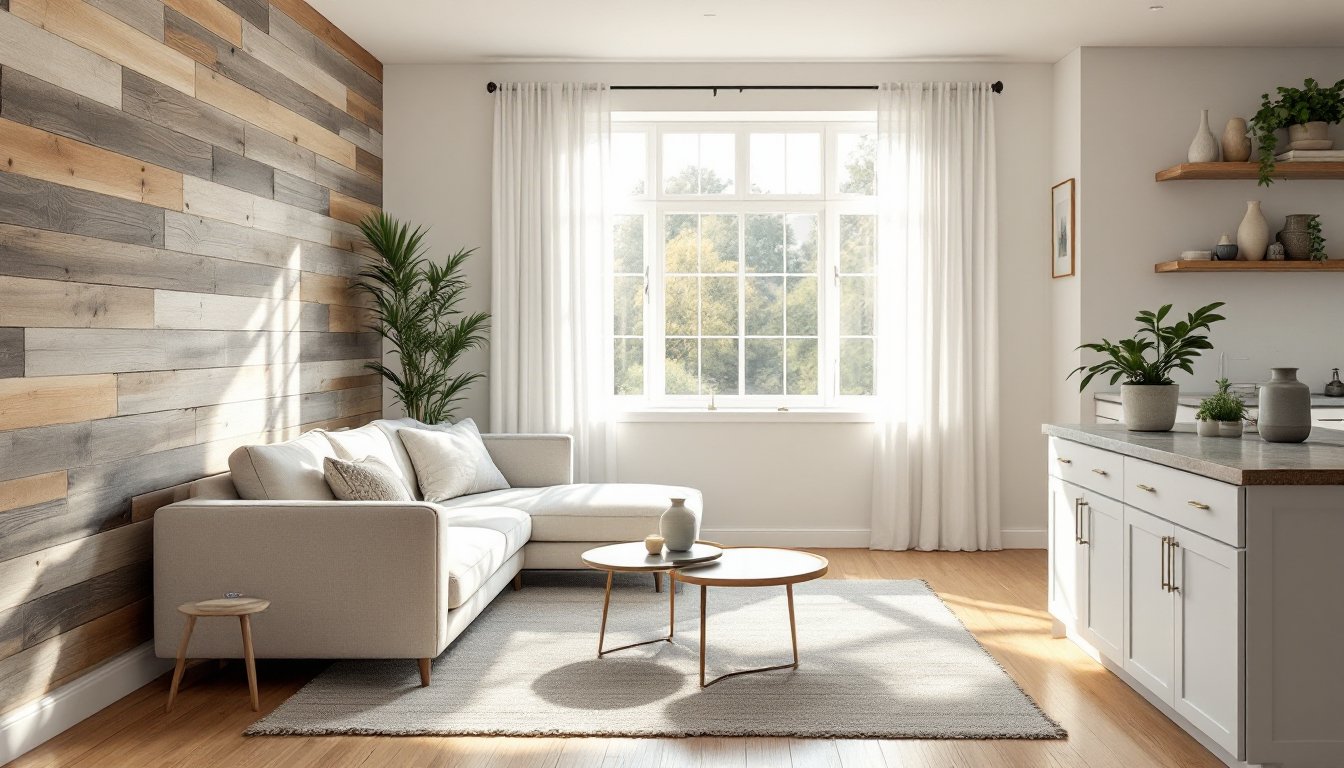
Reclaimed wood salvaged from old barns, factories, and demolished buildings provides instant character and eliminates demand for virgin timber. Each board carries history in its nail holes, saw marks, and patina.
Sourcing matters. Reputable suppliers denail boards, kiln-dry them to eliminate pests and stabilize moisture content, and mill them to consistent dimensions. Expect to pay $6–$12 per board foot for common species like pine or oak, more for exotic woods like chestnut or heart pine. That’s 2–3 times the cost of new lumber, but the aesthetic can’t be replicated.
Reclaimed wood works well for accent walls, flooring, shelving, and furniture. For flooring applications, boards should be milled to uniform thickness (typically 3/4-inch) and properly acclimated to the room’s humidity for at least 72 hours before installation. Finish with a low-VOC polyurethane or natural oil to preserve the weathered appearance.
Recycled wood products like MDF and particleboard made from post-industrial sawdust offer another option, particularly for cabinet boxes and underlayment. Look for products certified by the Forest Stewardship Council (FSC) and formaldehyde-free adhesives (often labeled CARB2 or NAF, no added formaldehyde).
One caution: wood reclaimed from structures built before 1978 may contain lead paint. Testing is essential before cutting or sanding. Hire a certified lead inspector if there’s any question.
Eco-Friendly Flooring Options
Sustainable flooring has matured beyond niche products into mainstream choices that match or exceed conventional materials in performance.
Bamboo is technically a grass, not a wood, and reaches harvestable maturity in 3–5 years versus 20–30 for hardwoods. Strand-woven bamboo rates harder than oak on the Janka scale (around 3,000 versus 1,290 for red oak), making it suitable for high-traffic areas. Installation resembles standard hardwood, nail down over plywood subfloor or float as engineered planks. Cost runs $3–$8 per square foot installed.
Avoid bamboo sourced from unclear origins: some manufacturers use formaldehyde-based adhesives. Look for FloorScore or GreenGuard certification for low emissions.
Cork flooring provides natural cushioning underfoot and excellent sound dampening. It’s harvested from the bark of cork oak trees without harming them, and the bark regrows. Cork works well in kitchens and bathrooms due to its natural antimicrobial properties, though it requires sealing every few years. Expect $4–$10 per square foot.
Linoleum (not vinyl) is made from linseed oil, cork dust, wood flour, and natural resins pressed onto a jute backing. It’s biodegradable, durable (can last 40+ years), and comes in wide color ranges. True linoleum costs $4–$8 per square foot and requires professional installation for best results.
Reclaimed wood flooring offers the same benefits as other reclaimed applications but requires careful attention to subfloor prep and moisture barriers. Uneven vintage boards may need extra leveling compound.
All these options should be installed over properly prepared subfloors, check for level (within 3/16-inch over 10 feet), moisture content, and structural soundness before laying a single plank.
Low-VOC Paints and Finishes
Paint is one of the easiest sustainable swaps and one of the most impactful for indoor air quality. VOCs evaporate during application and curing, releasing chemicals that can trigger headaches, dizziness, and long-term health effects.
Low-VOC paints contain fewer than 50 grams per liter of VOCs, a significant reduction from conventional paints that can exceed 200 g/L. Zero-VOC formulations take it further, with less than 5 g/L. Brands like Benjamin Moore Natura, Sherwin-Williams Harmony, and ECOS offer zero-VOC lines across multiple sheens.
Performance has improved dramatically, modern low-VOC paints offer excellent coverage (typically 350–400 square feet per gallon), durability, and color retention. They cost $40–$70 per gallon, roughly $10–$20 more than standard paint, but the health benefits justify the premium.
Natural paints made from clay, lime, or milk protein (casein) take sustainability further. These contain no synthetic ingredients and are fully biodegradable. They work beautifully for historical restoration and create unique matte finishes, but they’re less durable than latex and require more frequent touch-ups. Application techniques differ too, milk paint often needs mixing from powder, and lime wash requires dampening the wall first.
For wood finishes, natural oils like linseed, tung, or hemp oil penetrate the grain without forming a plastic film. They’re easy to apply (wipe on, wipe off) and simple to repair, though they require more coats and longer cure times than polyurethane. Water-based polyurethanes offer a middle ground, lower VOCs than oil-based versions with comparable durability.
Ventilate well during any painting project, even with zero-VOC products. Run fans, open windows, and wear an N95 mask if sensitive to odors.
Sustainable Countertops and Surfaces
Countertops take serious abuse, so sustainable options must balance eco-credentials with real-world performance.
Recycled glass countertops combine crushed glass (often post-consumer bottles) with cement or resin binders. The result resembles terrazzo with vibrant color options. They’re heat-resistant, scratch-resistant, and each slab is unique. Cost ranges from $50–$100 per square foot installed. Cement-based versions require sealing every 1–2 years: resin-bound types need less maintenance but aren’t as heat-tolerant.
Reclaimed wood makes warm, character-rich countertops for low-moisture areas like islands or coffee bars. It’s not ideal near sinks unless sealed meticulously with food-safe finish and maintained religiously. Expect $40–$80 per square foot for quality reclaimed slabs, milled and finished.
Paper composite countertops (like Richlite or PaperStone) are made from FSC-certified paper and resin, compressed under heat. They’re non-porous, heat-resistant to moderate temperatures, and develop a patina over time. They machine like hardwood and cost $30–$60 per square foot. Monthly oiling with mineral oil maintains appearance.
Recycled aluminum and stainless steel offer industrial aesthetics with recycled content often exceeding 70%. Both are durable, heat-proof, and recyclable at end of life. Steel shows scratches and fingerprints: brushed finishes hide this better than polished. Cost runs $80–$150 per square foot.
Concrete countertops made with fly ash (a coal combustion byproduct) or recycled aggregate reduce cement content and repurpose waste. Custom concrete allows for integral sinks, embedded objects, and any color imaginable. They require professional installation and sealing. Budget $75–$150 per square foot.
All stone options, granite, marble, soapstone, are natural but not renewable. If choosing stone, prioritize locally quarried material to reduce transportation impact.
Conclusion
Sustainable interior materials deliver tangible benefits, cleaner air, reduced waste, and often superior longevity, without sacrificing style or performance. Start with high-impact changes like low-VOC paint and natural textiles, then tackle larger investments like flooring or countertops as budgets allow. Every material choice is a vote for the kind of built environment we want to live in. Choose wisely, install carefully, and these materials will serve homeowners well for decades.