

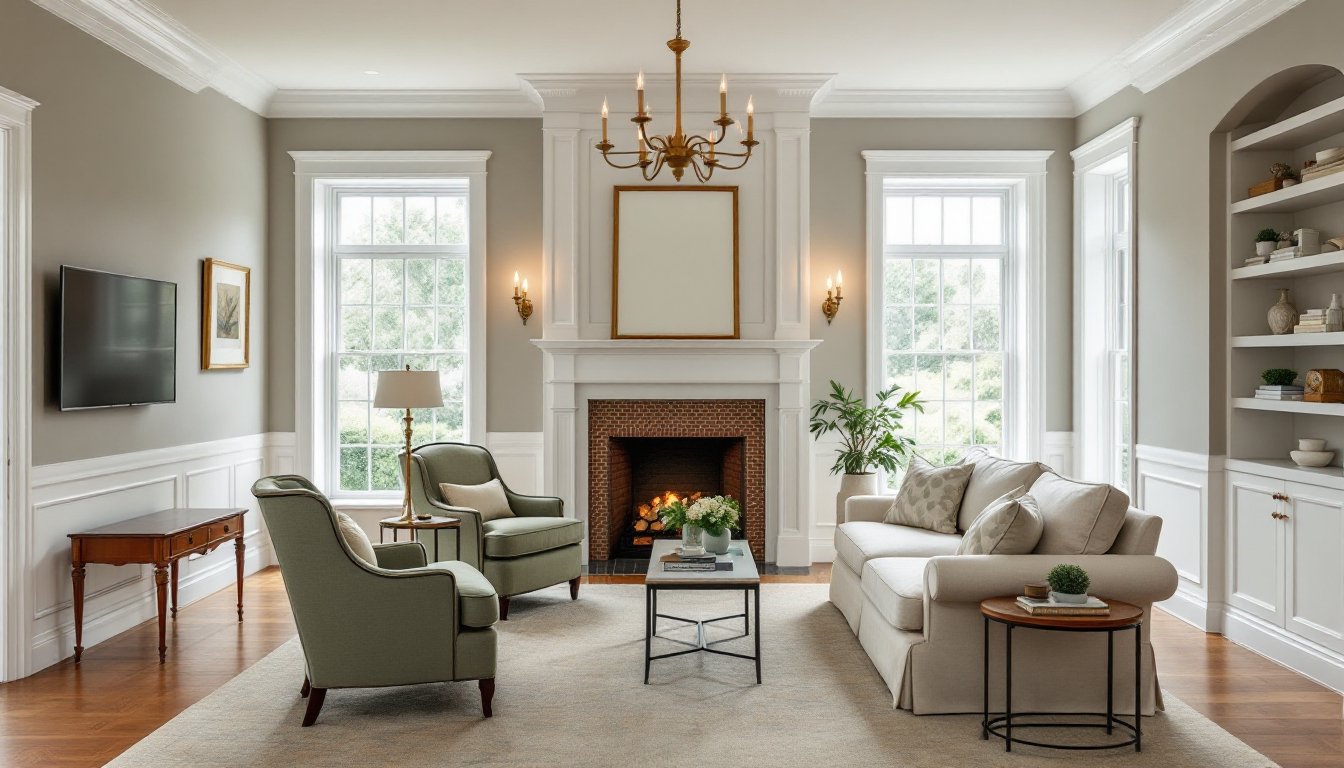
American Classic Interior Design: Timeless Elegance for the Modern Home
American Classic interior design doesn’t scream for attention, it earns it through balanced proportions, quality materials, and restraint. This style pulls from colonial roots, Georgian symmetry, and Federal-era craftsmanship, filtered through centuries of practical American living. It’s not a museum recreation. Done right, it layers historical integrity with livable comfort, creating spaces that feel both grounded and refined. For homeowners tackling renovations or furnishing a new space, understanding the bones of this style, its colors, architectural details, and furniture profiles, makes it easier to execute without veering into theme-park territory or bland beige mediocrity.
Key Takeaways
- American Classic interior design achieves timeless appeal through balanced proportions, quality hardwood materials, and restrained color palettes rooted in 18th and early 19th-century American architecture.
- Color choices should emphasize muted, historically accurate hues like creams, soft grays, muted greens, and deep blues, with lighter trim to highlight molding profiles rather than bold accent walls.
- Architectural elements like raised-panel wainscoting, crown molding, dentil trim, and six-panel doors are foundational to the style and provide the highest visual impact during renovations.
- Furniture should feature solid hardwood construction with visible joinery, clean silhouettes in pieces like Windsor chairs and drop-leaf tables, upholstered in natural fibers and classic patterns rather than modern synthetics.
- Authentic hardware, proper trim proportions, and functional window treatments like shutters and plain linen drapes elevate American Classic spaces without requiring expensive, trendy upgrades.
- American Classic differs from similar styles like English Georgian and French Country through its emphasis on simplicity, symmetry, and proportion over ornate details, creating spaces that remain relevant for decades.
What Is American Classic Interior Design?
American Classic interior design synthesizes influences from 18th and early 19th-century American architecture, primarily Colonial, Georgian, and Federal styles. It borrows English decorative traditions but tempers them with New World pragmatism and simpler lines.
The hallmark is symmetry. Rooms center on focal points: a fireplace flanked by matching windows, a centered doorway, evenly spaced millwork. Furniture arrangements mirror this balance. Unlike more ornate European counterparts, American Classic avoids heavy gilding and excessive carving. Instead, it relies on wood craftsmanship, clean joinery, visible grain, thoughtful proportion.
Architecturally, this style often includes raised-panel wainscoting, crown molding, dentil trim, and chair rails. Windows are typically double-hung with divided lites (individual panes separated by muntins). Flooring leans toward wide-plank hardwood, oak, maple, or cherry, sometimes with a border inlay in formal rooms.
This isn’t a style dictated by a single era’s trends. It’s cumulative, drawing from the period spanning roughly 1700–1830 but refined and adapted over generations. Think of it as the architectural equivalent of a well-made Windsor chair: rooted in tradition, built to last, comfortable enough for daily use.
Key Characteristics of American Classic Style
Color Palettes That Define the Look
American Classic interiors favor muted, historically accurate hues over bright or trendy tones. The palette comes from natural pigments available in early America and the desire for understated elegance.
Common wall colors include:
- Creams and off-whites (warmer than stark white, often with a slight yellow or gray undertone)
- Soft grays and greiges (balanced neutrals that work with wood tones)
- Muted greens (sage, olive, celadon, reflecting period paint recipes)
- Deep blues and Prussian tones (used in dining rooms or libraries)
- Warm terracotta and ochre (less common but period-appropriate in certain regional contexts)
Trim is typically painted in lighter shades than walls, often semi-gloss white or cream, to highlight molding profiles. Darker accent walls weren’t traditional: instead, contrast came from wallpaper with small-scale patterns, damasks, stripes, or botanical prints, or wood paneling left natural or stained.
Ceiling paint is almost always flat white, sometimes with a hint of warmth. High-gloss finishes didn’t exist in early American homes and still feel out of place today.
Furniture and Architectural Elements
Furniture in American Classic design reflects the era’s craftsmanship and practicality. Pieces are typically made from solid hardwoods, cherry, mahogany, maple, or walnut, with visible joinery and minimal veneering.
Key furniture profiles:
- Chippendale and Queen Anne chairs with cabriole legs and upholstered seats
- Windsor chairs (spindle-back, often painted or left natural)
- Highboys and lowboys (tall chests and dressing tables with bracket feet)
- Trestle tables and drop-leaf dining tables (expandable, functional)
- Wingback chairs and rolled-arm sofas in durable fabrics like linen, wool, or leather
Upholstery leans toward solid colors or understated patterns, ticking stripes, small checks, muted florals. Overstuffed or heavily tufted pieces feel too Victorian: American Classic furniture has a leaner, more architectural silhouette.
Architectural elements anchor the style. Raised-panel doors (both interior and cabinetry) are standard. Mantels are simple, often with a flat frieze, pilasters, and a cornice, proportions matter more than ornament. Built-in shelving flanking fireplaces is common, typically with adjustable shelves and panel backs.
Crown molding should be proportional to ceiling height, 3 to 5 inches in an 8-foot room, larger in taller spaces. Baseboard is typically 5 to 7 inches tall, sometimes taller in formal rooms, with a simple profile rather than complex stacking.
Window treatments are simple and functional: shutters (louvered or raised-panel), plain linen or cotton drapes, or roman shades. Heavy swags and valances skew too formal or Victorian.
How to Incorporate American Classic Design in Your Home
Start with the architecture. If the home has existing millwork, crown, baseboards, door casings, evaluate whether it fits the style. Modern ranch trim (2-inch clamshell casing, thin baseboards) won’t support the look. Replacing or augmenting trim is one of the highest-impact changes.
Adding wainscoting or chair rails:
- Measure wall height and plan chair rail placement at roughly 32 to 36 inches from the floor (traditional proportion is one-third wall height).
- Install 1×4 or 1×6 rail stock (actual dimensions 3/4″ × 3.5″ or 5.5″) with a cap molding on top.
- Below the rail, add raised-panel wainscot or beadboard. Raised panels are more formal: beadboard (with 3- to 4-inch spacing) reads as cottage or informal classic.
- Prime and paint with semi-gloss or satin finish, easier to clean than flat.
Upgrading doors:
Replace flat slab doors with six-panel colonial doors (standard stock at most lumberyards). Interior doors are typically 1-3/8 inches thick: ensure hinges and jambs accommodate the style. Paint them to match trim, or stain if the rest of the woodwork is natural.
Flooring choices:
If installing new flooring, choose solid hardwood in widths of 3 to 5 inches (wider planks feel more rustic or farmhouse). Red oak is the most budget-friendly and period-accurate: white oak offers a slightly grayer tone popular today. Finish with satin polyurethane or hard wax oil for a low-sheen, authentic look.
Avoid glossy finishes and overly distressed or hand-scraped surfaces, those read more country or Tuscan.
Selecting furniture and fabrics:
Look for solid wood case goods with traditional joinery, dovetails in drawers, mortise-and-tenon in frames. Avoid particleboard or MDF cores in visible furniture.
Upholstery fabrics should be natural fibers, linen, cotton, wool, in solids or classic patterns. Avoid synthetic sheens or overly modern prints.
Lighting:
Choose brass or bronze fixtures with simple lines, chandeliers with candle-style arms, lantern pendants, or wall sconces with glass shades. Avoid brushed nickel (too contemporary) or oil-rubbed bronze with heavy distressing (too rustic).
Do not skip the details. Hardware matters: use brass or bronze cabinet knobs and bin pulls, not contemporary stainless or black matte. Switch plates should be narrow toggle-style or even period-accurate push-button if budget allows.
American Classic vs. Other Traditional Styles
American Classic shares DNA with several traditional styles but differs in restraint and proportion.
vs. English Georgian:
English Georgian is more ornate, with heavier moldings, elaborate plasterwork, and richer materials. American Classic simplifies those motifs, thinner crown, less carved detail, more painted surfaces instead of gilding.
vs. French Country:
French Country leans rustic, with distressed finishes, warm pastels, and decorative elements like toile and aged metals. American Classic is more formal and symmetrical, with cleaner lines and less patina.
vs. Colonial Revival (early 20th century):
Colonial Revival romanticizes early American design, sometimes exaggerating proportions or mixing elements from different periods. True American Classic adheres more closely to 18th-century precedents and avoids kitschy Americana.
vs. Federal Style:
Federal is a subset of American Classic, spanning roughly 1780–1820. It’s more delicate and refined, with slender proportions, inlays, and neoclassical motifs (urns, swags, eagles). American Classic as a broader category includes earlier Colonial and Georgian influence, which are heavier and less decorated.
Understanding these distinctions helps avoid style drift, mixing elements that clash in proportion or historical context.
Conclusion
American Classic interior design isn’t about recreating a period room in a historic house, it’s about using proportional millwork, quality materials, and restrained color to build spaces that feel grounded and livable. The style rewards attention to detail: proper trim profiles, authentic hardware, and furniture with real joinery. It’s not the fastest or cheapest approach, but it’s one of the most durable, both structurally and aesthetically. Done well, it doesn’t date.