

Boho Style Interior Design: Your Complete Guide to Creating a Free-Spirited, Eclectic Home
Boho style doesn’t follow a rulebook, it thrives on mixing vintage finds with handwoven textiles, layering patterns that shouldn’t work but somehow do, and celebrating imperfection. Born from bohemian counterculture and global influences, this design approach trades matching furniture sets for personality and texture. Unlike minimalist trends that strip rooms down to essentials, boho interiors pile on warmth through natural materials, rich colors, and collected treasures. For DIYers and homeowners willing to trust their instincts over staging guides, boho offers a forgiving, budget-friendly path to a space that actually feels lived-in.
Key Takeaways
- Boho style interior design prioritizes personality and texture over matching furniture sets, blending vintage finds, handwoven textiles, and global influences into lived-in, forgiving spaces.
- Natural materials like wood, rattan, jute, leather, and linen are essential to boho interiors, creating organic warmth and visible aging that defines the aesthetic.
- Layering textiles—kilim rugs over jute, embroidered pillows on poufs, and crocheted blankets—without worrying about pattern coordination is a core boho technique that adds depth and comfort.
- Boho color palettes work in two approaches: earthy neutrals (terracotta, ochre, cream) or bold jewel tones (emerald, sapphire, plum), both unified by warm metals and natural fibers.
- This design style is ideal for renters and DIYers because it requires no structural changes, relying instead on flexible elements like tapestries, layered rugs, and thrift-store finds to create character.
What Is Boho Style Interior Design?
Boho style, short for bohemian, pulls from 1960s and ’70s counterculture aesthetics, global textiles, vintage pieces, and a healthy disregard for conventional decorating rules. It’s an eclectic mix that embraces handcrafted objects, organic textures, and lived-in comfort over catalog-perfect symmetry.
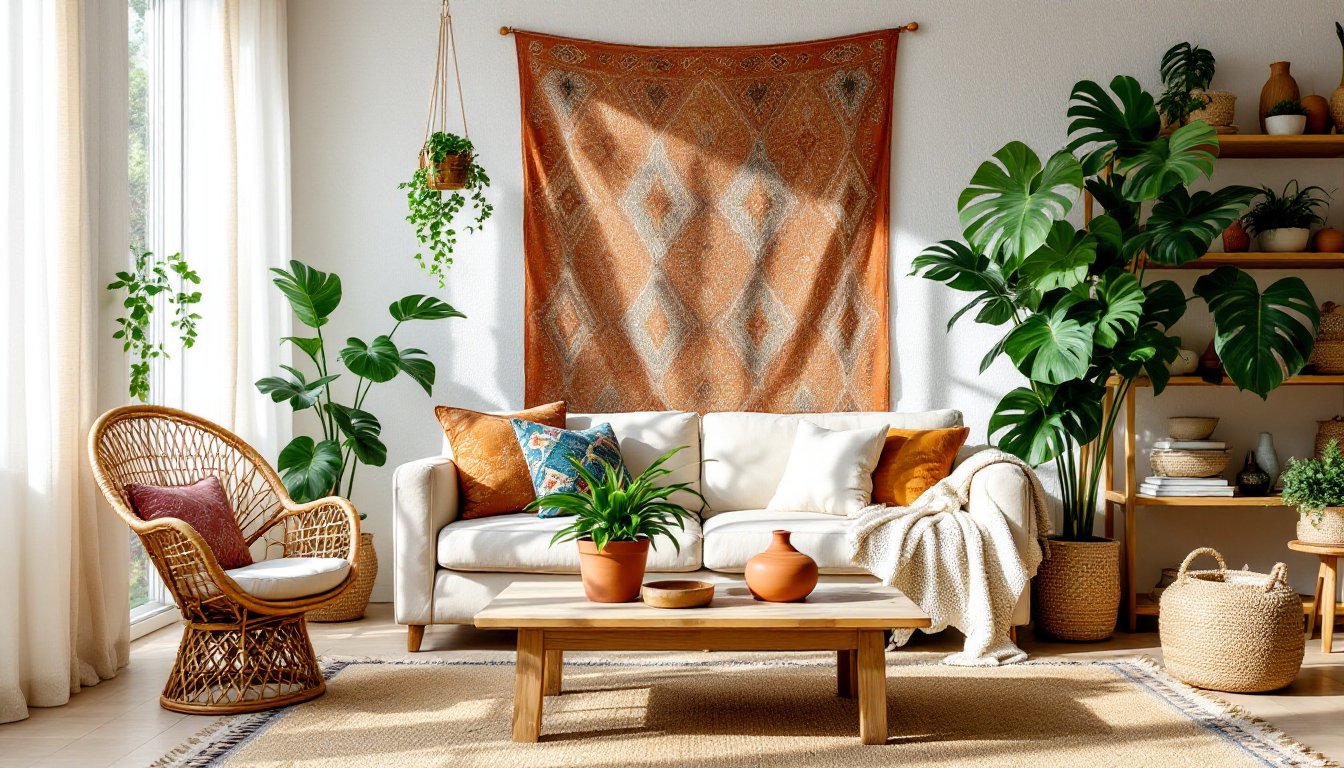
Unlike farmhouse or coastal styles with clear formulas (shiplap plus neutrals, or navy stripes plus rope accents), boho design resists rigid definitions. A room might pair a Moroccan wedding blanket with a rattan peacock chair, macramé wall hangings, and a salvaged wood coffee table, all unified by natural materials and warm tones rather than matching finishes.
The style’s roots trace back to 19th-century Paris, where artists and writers rejected bourgeois convention, but modern boho interiors draw heavily from mid-century hippie culture, North African markets, Indian textiles, and Southwestern folk art. This global fusion means no two boho spaces look identical, which makes it ideal for DIYers working with thrift finds, flea market scores, and inherited furniture.
Boho works in rentals and owned homes alike because it doesn’t rely on structural changes or built-ins. Renters can layer rugs over builder-grade carpet, hang tapestries to cover bland walls, and swap in vintage lighting without touching a single wire. Homeowners get the same flexibility plus the option to add permanent touches like exposed ceiling beams or plastered accent walls if the project scope allows.
Key Elements That Define Boho Interior Design
Natural Materials and Textures
Boho spaces lean heavily on wood, rattan, jute, leather, clay, and linen, materials that age visibly and bring organic warmth. A room might include a reclaimed pine bench (actual dimensions often 1.5″ × 11.25″ nominal 2×12 boards), woven seagrass baskets, a macramé plant hanger, and terra-cotta planters all in one sight line.
Rattan and wicker furniture show up constantly, peacock chairs, papasan frames, hanging egg chairs suspended from ceiling joists rated for at least 50 lbs dead load per the International Residential Code (IRC). If adding a ceiling hook for a hanging chair, locate a joist with a stud finder and use a heavy-duty swag hook or eye bolt threaded into solid wood, not just drywall anchors.
Exposed wood, whether ceiling beams, a live-edge shelf, or a salvaged door turned headboard, adds architectural texture. When mounting heavy shelving or repurposed wood elements to walls, always anchor into studs spaced 16″ or 24″ on center. Use a level and appropriate hardware: a floating shelf holding books or pottery can exert significant cantilever force.
Indoor plants are non-negotiable. Pothos, monstera, fiddle-leaf figs, and succulents thrive in boho interiors, often displayed in mismatched ceramic or woven planters. Consider drainage and use saucers to protect wood furniture and flooring from water damage. If hanging multiple plants, distribute weight across several ceiling points rather than clustering on one joist.
Layered Textiles and Patterns
Boho style piles on textiles, kilim rugs over jute rugs, embroidered throw pillows on leather poufs, crocheted blankets draped over linen sofas. The key is layering different textures and patterns without worrying about whether they “match.”
Start with a large jute or sisal area rug as a neutral base (typical coverage for an 8’×10′ rug runs around 80 square feet). Layer a smaller vintage kilim, Persian, or Turkish rug on top for color and pattern. This adds softness underfoot and defines seating areas, especially in open-plan spaces.
Textile walls, tapestries, woven wall hangings, or macramé, introduce pattern without paint or wallpaper. Hang textiles with a curtain rod, wooden dowel, or even a salvaged tree branch mounted on wall brackets. For heavier weavings, use drywall anchors rated for the weight or hit studs directly.
Mix prints freely: ikat, suzani, mudcloth, batik, paisley, and geometric patterns all coexist in boho rooms. The unifying thread is often a shared color family (earthy ochres and terracottas, or jewel tones like deep teal and burgundy) and natural fiber content, cotton, wool, linen, silk.
Window treatments should feel relaxed. Sheer linen curtains, bamboo shades, or beaded curtains work better than heavy drapes or mini-blinds. Mount curtain rods a few inches above the window frame and extend them past the frame width for a more spacious look.
How to Create a Boho Living Space in Your Home
Start with furniture that shows age or craft. Scour thrift stores, estate sales, and online marketplaces for wooden dressers, cane-back chairs, leather ottomans, and low-profile sofas. Mismatched pieces work as long as they share similar finishes (warm woods, worn leather, natural fibers).
Low seating feels inherently boho. Floor cushions, poufs, and daybeds create casual, lounge-friendly zones. If building a daybed frame from lumber, use 2×6 or 2×8 boards for the base frame to support a twin mattress (actual dimensions around 38″×75″). Sand all edges smooth and apply a natural oil or stain, skip high-gloss finishes that read too formal.
Add a gallery wall or textile display to one focal wall. Mix framed art, mirrors with ornate frames, woven baskets, and hanging plants. Use a variety of frame finishes, brass, wood, painted, and don’t worry about aligning everything on a perfect grid. Organic, asymmetrical arrangements feel more authentic.
Lighting sets the mood. Swap builder-grade fixtures for pendant lights with woven shades, Moroccan lanterns, or vintage brass floor lamps. String lights or Edison bulb strands add ambient glow without hardwiring (just tuck cords neatly along baseboards or behind furniture). If replacing a ceiling fixture, turn off power at the breaker and follow National Electrical Code (NEC) guidelines, or hire a licensed electrician if unsure.
Open shelving in kitchens and living areas displays pottery, glassware, plants, and books. Install brackets into studs and use solid wood or reclaimed boards (1×8 or 1×10 nominal, actual ¾”×7.25″ or ¾”×9.25″). Seal raw wood with polyurethane or a food-safe finish if shelves hold dishware.
Incorporate DIY macramé projects, wall hangings, plant hangers, or curtain tiebacks, using cotton cord and basic knots. Plenty of free tutorials exist online: materials cost under $20 for most beginner projects.
Don’t overlook scent and sound. Burn incense, use essential oil diffusers, or place dried lavender in bowls. Add a vintage record player or small speaker for background music. Boho spaces engage more than just the eyes.
Boho Color Palettes: Finding Your Perfect Mix
Boho color schemes split into two main camps: earthy neutrals or saturated jewel tones. Both work: the choice depends on natural light and personal preference.
Earthy palettes lean on terracotta, ochre, rust, sand, cream, olive, and burnt sienna. These warm neutrals pair beautifully with natural wood tones and greenery. Paint walls in warm whites or soft beiges, look for undertones with yellow or red, not gray or blue. One gallon of paint typically covers 350–400 square feet with one coat: most rooms need two coats for even coverage.
Jewel-tone palettes go bolder with emerald green, sapphire blue, deep plum, mustard yellow, and burgundy. Use these as accent colors through textiles, painted furniture, or a single statement wall. A 1-quart sample of paint costs around $5–$8 and covers roughly 100 square feet, plenty for testing on a 2’×2′ section before committing.
Mix metals freely. Brass, copper, and bronze fixtures and accents bring warmth and age. Matte or brushed finishes read more authentically boho than polished chrome or stainless steel.
When painting furniture, skip sanding and priming only if using a paint designed for adhesion (chalk paint or bonding primer). Otherwise, lightly sand glossy finishes with 120-grit sandpaper, wipe clean, apply a bonding primer, then topcoat. Let each coat dry fully, usually 2–4 hours, and apply a clear protective finish for durability on high-use pieces.
Test colors in different lighting conditions. What looks like soft peach in morning sun might read orange under evening incandescents. Paint sample boards or poster board squares and move them around the room throughout the day.
Conclusion
Boho style rewards experimentation over perfection. Start with natural materials, layer textiles without overthinking, and trust that collected, mismatched pieces create more character than anything bought as a set. Most projects require basic tools, drill/driver, level, stud finder, paintbrush, and straightforward techniques. The style’s forgiving nature makes it ideal for DIYers building confidence, and since it celebrates imperfection, there’s no such thing as a mistake, just another layer of personality.