

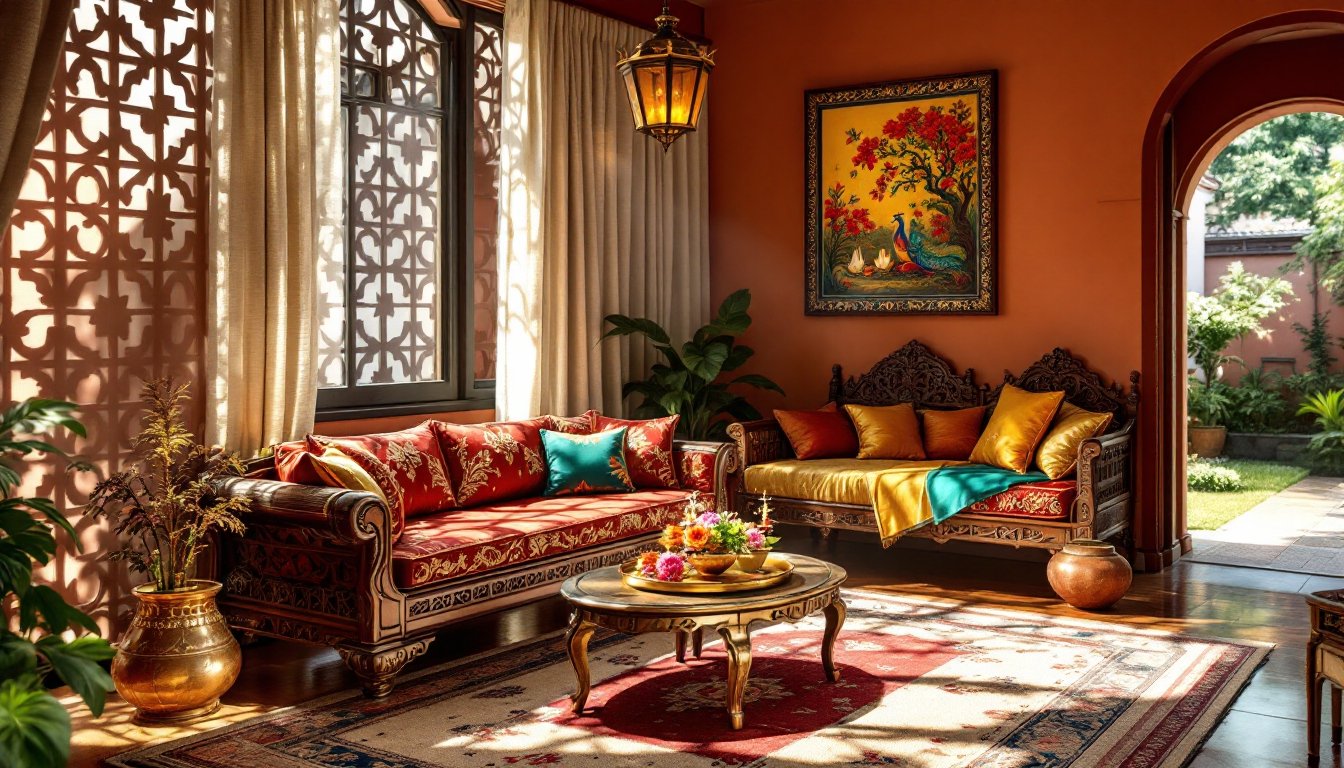
Indian Interior Design: Transform Your Home with Rich Colors, Timeless Traditions & Modern Elegance
Indian interior design brings together centuries of cultural heritage, bold artistry, and a warmth that turns a house into a home. It’s not just about throwing some embroidered pillows on a sofa, it’s a layered approach that balances rich color, intricate craftsmanship, and natural materials. From carved wooden screens to hand-painted tiles and brass accents, every element tells a story. Whether someone is renovating a single room or reimagining an entire floor plan, Indian design offers a flexible, visually striking framework that works in both traditional and contemporary spaces.
Key Takeaways
- Indian interior design celebrates bold, saturated color, handcrafted details, and natural materials that tell stories through every element in a room.
- Core design features include jewel-tone palettes with symbolic meaning, carved wood furniture, brass and copper accents, and layered textiles that create a maximalist aesthetic.
- Indian interior design adapts across styles—from traditional and Mughal-inspired to contemporary and ethnic fusion—making it flexible for both large-scale renovations and small accent updates.
- Start incorporating Indian design with textiles, accent wall colors, and decorative pieces like jali screens or brass lamps rather than committing to full renovations.
- The style values visible craftsmanship, imperfect artisanal details, and intentional ornamentation, prioritizing authenticity and personal cultural meaning over mass-produced uniformity.
What Makes Indian Interior Design Unique?
Indian interior design stands out because it refuses to follow a single aesthetic rulebook. Instead, it draws from regional traditions spanning thousands of years, Mughal palaces, Rajasthani havelis, South Indian temple architecture, and colonial-era bungalows all contribute DNA to the style.
What ties it together is an unapologetic use of color and pattern. Where minimalist Western trends lean neutral, Indian interiors embrace jewel tones, deep reds, saffron, emerald, indigo, often layered in the same room. This isn’t random: colors carry symbolic weight (red for celebration, yellow for spirituality, green for fertility) and are chosen with intention.
Handcrafted details are another hallmark. Machine-made uniformity takes a backseat to items with visible craftsmanship: block-printed fabrics, hand-knotted rugs, carved teak furniture, hammered metalwork. Imperfections aren’t flaws, they’re proof of human hands at work.
Finally, Indian design blends indoor and outdoor living. Courtyards, verandas, and large windows aren’t afterthoughts. Natural ventilation, daylighting, and connections to gardens or terraces are baked into layouts, a practical response to climate that also creates visual flow.
Core Elements of Indian Interior Design
Color Palettes and Patterns
Indian interiors don’t shy away from saturated color. Walls might be painted in turmeric yellow, terracotta, or deep crimson, often paired with contrasting trim or ceiling details. Jewel tones, sapphire blue, ruby red, emerald green, show up in textiles, upholstery, and tilework.
Patterns layer freely: paisley, ikat, mandala motifs, and geometric latticework appear on everything from cushions to window grilles. Block-printed fabrics (like Bagru or Ajrakh prints) and embroidered textiles add texture without feeling busy, because the color families stay cohesive.
If bold color feels like too much, a neutral base works. Sandstone beige, warm white, or soft gray walls let furniture and accents do the talking. The key is contrast, light walls with dark wood, or pale floors with vibrant rugs.
Furniture and Decorative Accents
Indian furniture leans heavy and grounded. Solid teak, rosewood, or mango wood pieces, often hand-carved with floral or geometric motifs, anchor a room. Low-profile seating like daybeds (diwan), floor cushions, and carved wooden benches reflect traditional sitting habits, though full-height sofas and chairs blend in modern homes.
Brass and copper accents are everywhere: lamps, trays, bowls, door handles. Over time, they develop a patina that adds character. If that’s not the look, a quick polish with lemon juice and salt brings back the shine.
Textiles do heavy lifting. Silk, cotton, and jute appear as curtains, throws, table runners, and wall hangings. Layering is standard, multiple rugs, stacked pillows, draped fabrics over furniture. It’s maximalist, but purposeful.
Decorative screens (jali panels) made from carved wood or perforated metal serve as room dividers, headboards, or window treatments. They offer privacy while letting light and air through, a practical feature that doubles as sculpture.
Finally, art and artifacts personalize the space: miniature paintings, bronze sculptures, temple bells, vintage textiles framed as wall art, or antique doors repurposed as headboards. Authenticity matters more than perfection.
Popular Indian Interior Design Styles
Indian design isn’t monolithic. Regional and historical influences create distinct substyles, each with its own material palette and decorative language.
Traditional Indian interiors lean heavily on carved wood, rich fabrics, and ornate details. Think dark teak furniture with inlay work, silk drapery, and hand-knotted Persian or Kashmiri rugs. Walls might feature frescoes or stenciled borders, and every surface holds something, statues, oil lamps, framed textiles. It’s layered and labor-intensive, best suited to larger rooms with high ceilings.
Mughal-inspired spaces echo the grandeur of 16th- and 17th-century courts. Key features: arched doorways (mehrab), intricate tile mosaics, mirrored accents, and low seating with bolster cushions. Color schemes favor ivory, gold, deep red, and cobalt blue. Chandeliers or lanterns with colored glass add drama.
Contemporary Indian design strips back the ornamentation but keeps the soul. Clean lines, neutral walls, and modern furniture pair with statement pieces, a carved console, a vintage rug, brass pendant lights. It’s about restraint: one bold textile instead of five, a single large artwork instead of a gallery wall. Materials stay natural: limestone, terrazzo, jute, linen.
Ethnic Fusion blends Indian elements with mid-century modern, industrial, or Scandinavian styles. A teak credenza sits under a minimalist mirror: a block-printed dhurrie rug anchors a steel-and-glass dining table. This works well in open-plan homes where distinct zones need visual cohesion without uniformity.
How to Incorporate Indian Design into Your Home
Start small if a full redesign isn’t in the cards. Indian design is modular, you can layer it in gradually without ripping out drywall.
Add textiles first. Swap out plain pillows for block-printed or embroidered covers in bold colors. Drape a kantha quilt over a sofa or bed. Hang a vintage sari as a curtain or wall tapestry. Textiles are low-commitment, high-impact, and easy to swap seasonally.
Repaint an accent wall. Choose a saturated tone, burnt orange, teal, or deep plum, and use it on one wall or in a niche. Pair it with white or cream elsewhere to keep the space breathable. If paint feels permanent, try peel-and-stick wallpaper with ikat or paisley patterns.
Bring in wood and metal furniture. A carved jali screen works as a headboard, room divider, or backdrop for a home office Zoom setup. A brass floor lamp or hammered copper side table adds warmth without clutter. Look for pieces with visible grain or hand-tooling, mass-produced particle board won’t read as authentic.
Layer rugs. Indian homes often use multiple rugs in the same space, a large jute rug as a base, topped with a smaller hand-knotted or dhurrie rug. This adds depth and makes a room feel intentionally curated.
Incorporate handmade decor. Swap generic art for framed Madhubani or Warli paintings, or hang a carved wooden mirror. Add a brass diya (oil lamp) or a set of vintage spice tins to open shelving. Small touches matter.
Use open shelving to display collections. Indian design loves visible storage, cookware, textiles, pottery, books. Floating shelves or a carved wooden étagère can show off brass vessels, ceramic bowls, or folded fabrics. It’s functional and decorative.
Consider architectural details for larger projects. If remodeling, think about adding arched doorways, ceiling beams stained in dark wood, or decorative tile backsplashes in kitchens and baths. Carved corbels or wooden brackets under shelves add traditional flair without major structural work. Always check local building codes if modifying load-bearing walls or adding fixed millwork.
Conclusion
Indian interior design offers a richly layered alternative to minimalist trends, one that values color, craftsmanship, and cultural memory. Whether someone leans traditional or contemporary, the principles, bold palettes, natural materials, handmade details, translate across styles and budgets. Start with textiles and accents, then build out as confidence grows. The result is a home that feels lived-in, personal, and unapologetically vibrant.