

Interior Design Melbourne: Your Complete Guide to Transforming Spaces in 2026
Melbourne’s design culture runs deeper than exposed brick and vintage furniture, it’s a working blend of European sophistication, coastal ease, and a uniquely Australian approach to light and space. Homeowners here demand more than pretty rooms: they want functional layouts that work with the city’s climate, heritage architecture that respects character while embracing modern living, and designers who understand the difference between a Northcote terrace and a Toorak mansion. Whether someone’s renovating a worker’s cottage in Footscray or building new in Bayside, getting the design right from the start saves money, avoids permit headaches, and delivers spaces people actually want to live in.
Key Takeaways
- Melbourne’s interior design market thrives on diverse housing stock and climate demands, requiring designers to solve real problems rather than apply cookie-cutter solutions across Victorian terraces, mid-century homes, and modern apartments.
- The Contemporary Australian Aesthetic and Coastal Hamptons styles dominate Melbourne’s interior design scene, emphasizing natural materials, authentic finishes, and functional layouts that respect heritage architecture while embracing modern living.
- Professional interior design services range from $150–$300/hour for consultations to $25,000–$60,000+ for full-service home renovations, with established designers securing better pricing and lead times through trade relationships.
- Interior design in Melbourne protects your investment by preventing costly renovation mistakes early, selecting climate-appropriate materials for hot summers and wet winters, and delivering durable spaces that add property value.
- Neighborhoods like South Yarra, Fitzroy, and Brighton offer practical design inspiration, while visiting renovated open homes and local showrooms in Richmond and Collingwood helps you understand materials and finishes firsthand before committing to design decisions.
Why Melbourne’s Interior Design Scene Is Thriving
Melbourne’s interior design industry has hit its stride for several practical reasons. The city’s housing stock is wildly varied, Victorian-era terraces, mid-century bungalows, 1970s brick veneers, and contemporary townhouses often sit on the same street. That diversity forces designers to develop real problem-solving skills rather than cookie-cutter approaches.
The construction boom of the past decade left thousands of new apartments and renovated homes needing thoughtful interiors. Many builders deliver bare shells or builder-grade finishes that owners immediately want to upgrade. Custom joinery, lighting design, and space planning are no longer luxuries, they’re expected in competitive property markets.
Melbourne’s climate plays a role too. Homes need to handle wet winters and hot, dry summers without sacrificing natural light. Double-glazing, thermal drapes, and strategic window placement aren’t just comfort upgrades, they cut energy bills and meet increasingly strict building performance standards. Designers who understand passive solar principles and Victoria’s residential energy regulations deliver real value.
The city’s creative culture supports the industry. Furniture makers, textile studios, and custom fabricators operate locally, making bespoke work accessible. RMIT and other institutions churn out trained designers, keeping the talent pool deep and competitive.
Popular Interior Design Styles in Melbourne
Contemporary Australian Aesthetic
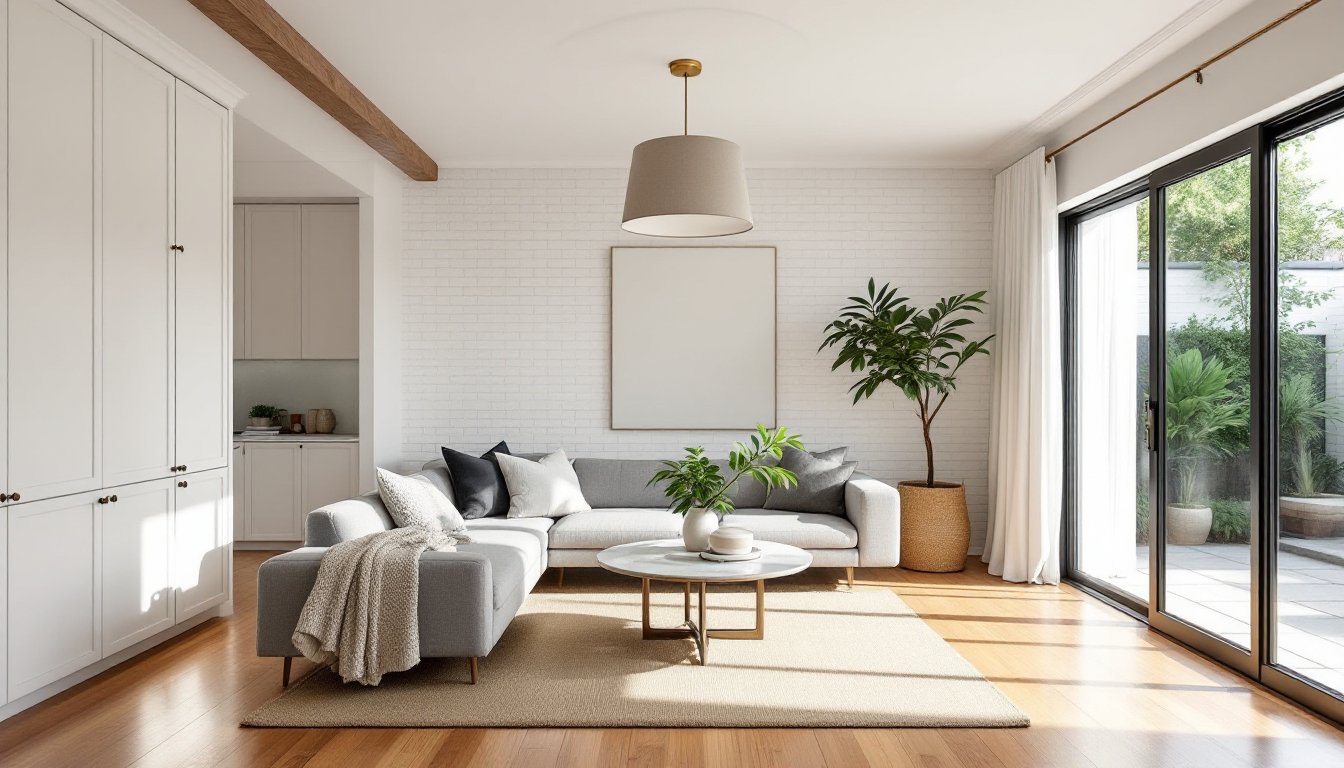
This style leans hard on natural materials, Australian hardwoods like spotted gum and blackbutt, stone (especially bluestone and Victorian sandstone), and tactile textiles like linen and wool. The palette stays neutral: whites, warm grays, sandy tones, with occasional charcoal or deep green accents.
Key features include open-plan living spaces that connect to outdoor areas, often through bifold or stacking doors. Ceilings might expose timber beams or feature raked profiles to maximize north-facing light. Joinery is clean-lined but not cold, think handleless cabinetry in matte finishes, open shelving in kitchens, and built-in storage that hides clutter without feeling clinical.
This approach works especially well in renovations of older homes, where original features like ceiling roses, timber floors, and picture rails are retained and complemented rather than stripped out. It’s not minimalism for its own sake, it’s about edited, functional spaces that respect the bones of a building.
Coastal and Hamptons-Inspired Interiors
Bayside and beachside suburbs drive demand for this look, though it’s migrated inland too. The formula: white or off-white walls, natural fiber rugs (jute, sisal), weathered timber furniture, and plenty of texture through cushions, throws, and woven baskets.
Shiplap paneling (or V-groove lining boards) shows up on feature walls or ceilings. Kitchens often use white shaker-style cabinetry with marble or white stone benchtops. Lighting fixtures trend toward rattan pendants, aged brass, or matte black metal.
It’s easy to oversweeten this style with too much nautical theming or overly distressed finishes. Melbourne designers tend to ground it with quality materials and restrained palettes, think linen rather than chintz, natural stone rather than white laminate.
How to Choose the Right Interior Designer in Melbourne
Start by clarifying what level of service is needed. Some designers offer full-service packages, space planning, materials selection, furniture sourcing, project management, and contractor coordination. Others provide consultation-only services: a few hours of advice, a mood board, and a shopping list the homeowner executes independently.
Check credentials. Membership in the Design Institute of Australia (DIA) indicates formal training and adherence to professional standards. Ask to see a portfolio, but pay attention to variety, a designer who’s only done one style might struggle with different briefs.
Get specific about process and fees upfront. Some designers charge hourly rates (expect $120–$250/hour depending on experience). Others work on fixed fees for defined scopes or cost-plus models where they mark up furniture and materials. Understand what’s included: are site visits, revisions, and trade coordination part of the fee, or billed separately?
Ask about trade relationships. Established designers have accounts with suppliers, custom joinery shops, and upholsterers, often securing better pricing and lead times than retail. They should also carry professional indemnity insurance, critical if design decisions lead to disputes or defects.
Finally, talk logistics. Does the designer visit the site regularly during construction? How do they handle changes or budget overruns? Who manages contractors? Clear communication and project management separate smooth renovations from expensive disasters.
What Interior Design Services Cost in Melbourne
Pricing varies widely based on scope, designer experience, and project complexity. For consultation-only services, expect to pay $150–$300 per hour or a flat fee around $800–$1,500 for an initial concept package covering one or two rooms. This typically includes a mood board, basic floor plan, paint selections, and a furniture/materials list.
Full-service design for a whole home ranges from $15,000–$60,000+. A three-bedroom house renovation might cost $25,000–$35,000 in design fees if it involves custom joinery, lighting plans, and finishes schedules. High-end projects with bespoke furniture, detailed millwork, and art consultation push well past $60,000.
Some designers charge a percentage of construction cost, usually 10–15% for residential projects. This model aligns the designer’s fee with the budget but requires trust and clear cost controls.
Materials and furniture sit on top of design fees. A living room might need $8,000–$20,000 in furniture and soft furnishings for quality pieces. Custom joinery (think built-in wardrobes, kitchen cabinetry, or entertainment units) runs $1,200–$2,500 per linear meter depending on materials, finishes, and hardware.
Remember: good design often saves money by avoiding mistakes. An experienced designer spots structural issues early, selects durable materials suited to Melbourne’s climate, and prevents costly rework from poor planning. Skipping professional input on a $150,000 renovation to save $5,000 in fees rarely ends well.
Top Neighborhoods for Interior Design Inspiration
South Yarra and Toorak showcase high-end interiors, heritage mansions with contemporary extensions, luxury apartments, and homes where budgets stretch to custom everything. Showrooms and high-end furniture retailers cluster here too, making it easy to see quality materials and finishes in person.
Fitzroy and Collingwood offer grittier inspiration: warehouse conversions, worker’s cottages with bold color choices, and spaces that mix vintage finds with modern interventions. Designers here tend toward eclectic, layered looks rather than matchy-matchy suites.
Brighton and Bayside suburbs lean heavily into coastal and Hamptons styles, with beautifully executed examples of white-on-white palettes, natural textures, and indoor-outdoor living. The area’s larger blocks allow for poolside pavilions and entertaining spaces that drive design decisions.
Northcote and Thornbury show affordable, creative renovations, clever use of IKEA hacks mixed with custom joinery, bold paint choices in compact spaces, and resourceful reuse of existing features. These neighborhoods prove good design doesn’t require unlimited budgets.
Visit open homes in these areas, not just new builds, but renovated properties. Notice how designers handle awkward layouts, maximize storage, and integrate old and new. Real homes offer more practical lessons than glossy magazine spreads.
Local design studios, showrooms, and suppliers are concentrated in Richmond, Abbotsford, and Collingwood. Schedule appointments to see materials, finishes, and furniture options firsthand. Touchpoints matter, photos don’t convey how a fabric feels or how stone reacts to light.