

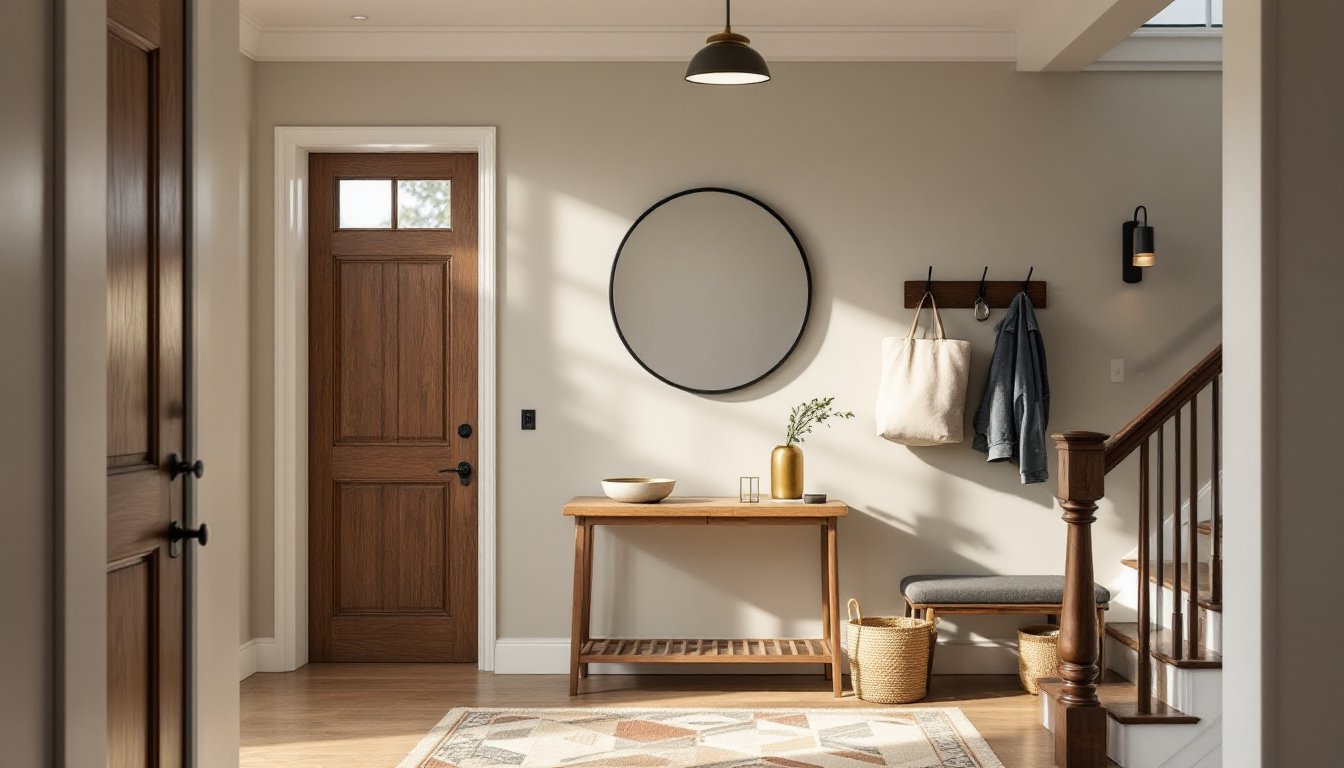
Foyer Interior Design: Transform Your Entryway Into a Stunning First Impression
The foyer is the handshake of a home, it sets the tone before anyone steps past the threshold. Yet most homeowners treat it like a pass-through zone, ignoring its potential to anchor the aesthetic and function of the entire house. A well-designed foyer does more than look good. It manages foot traffic, corrals daily clutter, and establishes a clear style direction. Whether working with a grand two-story entry or a narrow hallway-style space, the right design choices turn an overlooked transition zone into a purposeful, welcoming room that works as hard as it looks.
Key Takeaways
- A well-designed foyer interior design functions as both a practical transition zone and a style anchor, managing foot traffic, storage, and first impressions in seconds.
- Layered lighting—combining overhead fixtures, task lighting from wall sconces, and dimmers—transforms a foyer’s ambiance while eliminating dark corners and harsh shadows.
- Durable, moisture-resistant flooring like porcelain tile or luxury vinyl plank is essential for handling real-world wear from wet boots, bags, and daily foot traffic.
- Strategic storage solutions such as benches with cubbies, console tables with drawers, and wall-mounted hooks keep clutter hidden while maintaining visual clarity.
- Scale your foyer furnishings and fixtures to the room size: small spaces benefit from vertical elements and mirrors, while larger entries can showcase statement lighting and symmetrical arrangements.
- Avoid common mistakes like undersized rugs, oversized furniture, and flat paint finishes by planning your foyer design upfront and choosing materials rated for entryway durability.
Why Your Foyer Deserves Design Attention
A foyer isn’t decorative filler. It’s the decompression chamber between outside chaos and home order, and it needs to function under real-world conditions, wet boots, dropped backpacks, mail pileups, and guests forming first impressions in under ten seconds.
From a structural standpoint, foyers often sit at grade level or just above, making them prone to drafts, moisture tracking, and temperature swings. Flooring must handle abuse. Walls near the door take scuffs from bags and equipment. Ignoring these realities leads to premature wear and constant touch-ups.
Design attention also affects traffic flow. A poorly planned foyer creates bottlenecks or awkward sightlines into private areas. Strategic furniture placement, lighting, and storage guide movement and create natural zones for shoes, keys, and outerwear without visual clutter bleeding into adjacent rooms.
Finally, the foyer sets expectations. If it feels cohesive and intentional, the rest of the home reads as thoughtfully designed. If it’s an afterthought, that impression lingers. Investing time here pays off in both function and resale perception.
Essential Elements of Foyer Design
Every functional foyer relies on a few core components. Lighting, storage, and durable surfaces aren’t optional, they’re the framework everything else builds on.
Lighting That Sets the Mood
Foyer lighting operates on two levels: ambient and task. Overhead fixtures, whether a flush mount in an 8-foot ceiling space or a statement chandelier in a two-story entry, provide general illumination. Size matters: a fixture should be roughly one-quarter to one-third the width of the foyer or the width of a console table beneath it. For entries taller than 8 feet, consider a fixture with vertical scale, but keep the bottom at least 7 feet above finished floor to meet headroom clearance.
Task lighting fills in shadows. Wall sconces flanking a mirror or artwork add symmetry and eliminate harsh overhead glare. If the foyer includes a console or bench, a small table lamp adds warmth and flexibility. Dimmer switches (standard single-pole or smart-enabled) let users adjust intensity for different times of day.
Natural light counts, too. If there’s a sidelight or transom window near the entry door, skip heavy drapery. Frosted film or cellular shades provide privacy without blocking daylight.
Storage Solutions That Don’t Sacrifice Style
A foyer without storage becomes a dumping ground. The fix: built-ins, furniture, or wall-mounted systems that handle daily essentials without visual chaos.
Benches with cubbies or lift-top storage work in narrow entries. Standard bench height is 17 to 19 inches: depth should be at least 15 inches for stable seating. Below, open cubbies fit baskets for shoes or pet gear.
Console tables (typically 30 to 36 inches tall and 12 to 15 inches deep) offer a drop zone for keys and mail without eating floor space. Look for models with drawers or a lower shelf. In tight spaces, a wall-mounted floating shelf with hooks does the same job in 8 to 10 inches of depth.
Coat closets are ideal but rare in many layouts. If there’s a closet, maximize it: install double rods (upper at 80 inches, lower at 40 inches), add shelf dividers, and use the door back for hooks or an over-door organizer.
For open storage, limit visible items to what’s in current rotation. Off-season coats and extra gear belong in a hall or bedroom closet.
Foyer Design Ideas for Every Space Size
Foyer design scales to fit the footprint. A 4-by-6-foot entryway and a 10-by-12-foot entry hall require different approaches, but both can deliver impact.
Small foyers (under 40 square feet) need vertical thinking. Wall-mounted hooks, narrow console tables, and mirrors create function without crowding. A single pendant light or semi-flush mount keeps the ceiling uncluttered. Light paint colors and reflective surfaces (glass, lacquer, metal) make the space feel larger. Avoid bulky furniture: a slim bench or a wall-mounted fold-down seat works better than a full entryway set.
Medium foyers (40 to 80 square feet) allow for a console table, a bench or pair of chairs, and a small rug to define the zone. Artwork or a gallery wall adds personality. This is the sweet spot for a statement light fixture, something with presence but not overwhelming scale. If there’s room, a narrow bookcase or cabinet provides closed storage without blocking movement.
Large foyers (80+ square feet or two-story entries) can handle bold gestures. A round center table, symmetrical furniture arrangements, and layered lighting (overhead plus sconces plus table lamps) create a room-like feel. In two-story spaces, consider a chandelier that fills the vertical volume: calculate size by adding foyer length and width in feet, then converting to inches for fixture diameter (e.g., 10 feet + 12 feet = 22 inches wide). For height, aim for 30 to 36 inches of fixture length in standard two-story entries.
In any size, maintain a 3-foot clearway from the door swing to opposite walls or furniture. This meets accessibility standards and prevents bottlenecks.
Color Schemes and Materials That Make an Impact
Foyer materials face heavy use and variable conditions. Choose finishes that tolerate moisture, dirt, and impact without constant maintenance.
Flooring is the workhorse. Tile (porcelain or ceramic), luxury vinyl plank (LVP), and natural stone handle traffic and moisture better than carpet or hardwood. If matching existing hardwood in adjacent rooms, plan a transition strip or bordered tile insert in the high-traffic zone directly inside the door. For tile, use a slip-resistant finish (matte or textured) with a dynamic coefficient of friction (DCOF) rating of 0.42 or higher for safety.
Wall treatments in foyers should tolerate scuffs. Satin or semi-gloss paint (rather than flat) wipes clean easily. If the foyer includes a staircase, consider wainscoting or a chair rail at 32 to 36 inches, it’s both decorative and protective. Peel-and-stick wallpaper adds pattern without long-term commitment, but check adhesion on textured drywall first.
Color schemes depend on the foyer’s relationship to adjoining spaces. If it opens directly into the living area, carry the main color palette through for continuity. In closed-off entries, darker or bolder colors work without overwhelming the rest of the house. Lighter tones reflect more light, critical in windowless foyers.
Accent materials, metal hooks, wood benches, woven baskets, add warmth and texture. Mix finishes (matte black hardware, warm wood, brass accents) for a collected, less matchy look.
Common Foyer Design Mistakes to Avoid
A few missteps show up repeatedly in DIY foyer projects. Most are fixable, but it’s easier to get them right from the start.
Undersized rugs are the biggest offender. A tiny rug floating in the center looks like an afterthought. Size the rug so furniture legs rest on it, or go wall-to-wall with a runner in narrow entries. In a typical 5-by-8-foot foyer, use at least a 4-by-6-foot rug: larger is usually better.
Ignoring scale in lighting and furniture throws off proportion. A small pendant in a high ceiling disappears. An oversized mirror or console in a tiny entry creates claustrophobia. Measure twice, mock up with cardboard templates if needed.
Skipping the mudroom function turns the foyer into a mess. If there’s no dedicated mudroom, the foyer has to do that job. Include hooks, a shoe tray, and a spot for bags. Open storage works if users stay disciplined: otherwise, closed storage or a nearby closet is essential.
Overlooking durability means frequent repairs. Flat paint, unsealed wood benches, and plush rugs look great in photos but fail under real use. Choose materials rated for entryways, and plan for occasional deep cleaning.
Poor lighting placement leaves dark corners or harsh shadows. Layer sources, place switches at logical entry and exit points (three-way switches for foyers with multiple doorways), and include dimming capability.
Finally, delaying the design until after move-in usually means it never happens. Plan the foyer alongside other rooms, even if execution comes later. It’s the first space guests see and the last space homeowners notice, until it’s done right.