

Lake Forest Interior Design: Your Complete Guide to Elevated California Coastal Living
Lake Forest, California, blends coastal proximity with suburban comfort, creating homes that call for a distinct design sensibility. Unlike the stark beachfront minimalism of Newport or the rustic canyon aesthetics found farther inland, Lake Forest interior design balances the region’s mild climate, outdoor-centric lifestyle, and proximity to both nature and urban amenities. Homeowners here want spaces that feel open, inviting, and livable year-round, not showrooms. This guide breaks down what defines Lake Forest’s interior design landscape, the styles that work best, and how to select a designer who understands the area’s unique character.
Key Takeaways
- Lake Forest interior design balances coastal proximity with suburban functionality, prioritizing open floor plans, natural light, and durable materials that withstand active family lifestyles.
- Coastal contemporary and modern transitional are the most popular styles for Lake Forest homes, emphasizing clean lines, neutral palettes, and practical textures that complement newer architecture.
- Critical material choices include luxury vinyl plank or engineered hardwood flooring, quartz countertops, and large-format tiles that resist moisture and perform well in the region’s climate.
- Effective Lake Forest interior design incorporates layered LED lighting with dimmer switches, moisture-resistant paint in light neutrals, and smart window treatments that maximize natural light while maintaining privacy.
- Hiring a designer familiar with Lake Forest and Orange County projects ensures understanding of local suppliers, typical home layouts, and permitting requirements specific to the area.
- Built-ins, floating shelves, and functional mudroom setups are essential for Lake Forest homes where outdoor-centric living and wet gear require stylish yet practical storage solutions.
What Makes Lake Forest Interior Design Unique?
Lake Forest sits in a geographic sweet spot, close enough to the coast for marine layer mornings but far enough inland to get genuine warmth. That climate influences material choices. Homes benefit from natural ventilation, so designers often prioritize open floor plans with sliding glass doors or folding patio systems. Indoor-outdoor flow isn’t just aesthetic, it’s functional.
The housing stock itself leans newer, with many homes built from the 1980s onward. That means fewer load-bearing walls to contend with, making open-concept remodels more straightforward. Crown molding, recessed lighting, and vaulted ceilings are common, which gives designers a cleaner canvas than older Spanish revivals or Craftsman bungalows.
Natural light is abundant. Large windows and skylights are standard, so paint colors, finishes, and textiles must work under both direct sun and cooler evening light. Many Lake Forest interiors avoid high-gloss or overly saturated hues that can look washed out or aggressive under shifting daylight.
Finally, the lifestyle here skews family-oriented and active. Design solutions need to account for wet swimsuits, sports gear, sandy feet, and pets. That means durable flooring (luxury vinyl plank or sealed hardwood over carpet), easy-clean upholstery, and mudroom setups that actually function. Pretty matters, but practicality comes first.
Popular Interior Design Styles for Lake Forest Homes
Coastal Contemporary
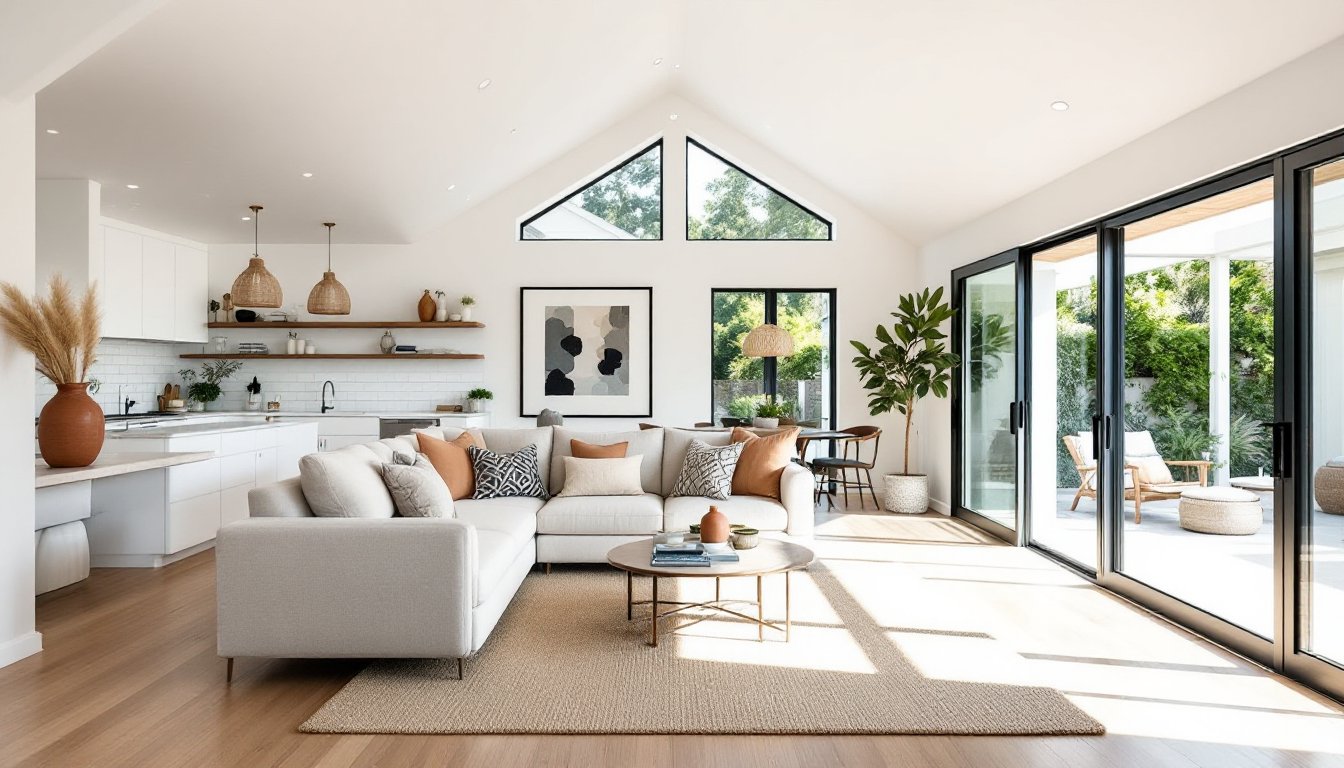
Coastal contemporary strips away the cliché seashells and driftwood mirrors. Instead, it emphasizes clean lines, neutral palettes, and textures that reference the beach without shouting it. Think white oak flooring, linen sofas, and cabinetry in matte white or soft gray. Accent colors come from natural materials, terracotta, jute, rattan, not nautical blues.
This style works well in Lake Forest because it complements the architecture without fighting it. Large-format tile (12×24 or bigger) in entryways and kitchens offers a seamless look. Shiplap can work as an accent wall, but skip the distressing, clean, painted boards fit better. Hardware leans toward brushed nickel or matte black rather than brass or chrome.
Lighting is key. Pendant fixtures with woven shades or simple drum shapes keep the vibe relaxed. Avoid chandeliers unless the ceiling height justifies it (10 feet or more). Layered lighting, recessed cans, under-cabinet LEDs, and task lamps, ensures the space stays functional after sunset.
Modern Transitional
Modern transitional bridges the gap between contemporary minimalism and traditional warmth. It’s the go-to for homeowners who want a polished look but don’t want their living room to feel like a hotel lobby. This style mixes materials: a marble kitchen island with shaker cabinets, or a sleek sectional paired with a vintage Persian rug.
In Lake Forest, modern transitional fits homes with both newer builds and mid-century bones. The style allows for flexibility, homeowners can lean slightly traditional with paneled wainscoting or push toward modern with frameless cabinetry and waterfall countertops.
Color schemes stay neutral but not sterile. Warm grays, greiges, and soft taupes dominate walls, with pops of deeper tones (charcoal, olive, terracotta) in pillows, art, or accent chairs. Wood tones matter: walnut and white oak read modern, while cherry or mahogany skew traditional.
Molding and trim should be intentional. A simple 3- to 5-inch baseboard with a clean profile works better than ornate colonial-style trim. Window casings can be slightly wider (up to 4 inches) to frame views without overwhelming the room.
Key Elements of Lake Forest Interior Design
Flooring: Hardwood remains popular, but engineered wood or luxury vinyl plank (LVP) offers better moisture resistance and less expansion/contraction with temperature swings. If going with hardwood, specify a matte or satin finish, high gloss shows every footprint. LVP brands like COREtec or LifeProof mimic wood grain convincingly and hold up to kids and pets. Tile works well in wet areas: porcelain in a wood-look plank format bridges aesthetics and durability.
Paint & Wall Treatments: Lighter neutrals reflect natural light and make rooms feel larger. Sherwin-Williams Alabaster or Benjamin Moore Simply White are workhorses in Lake Forest homes. Accent walls can use textured materials, board-and-batten, vertical paneling, or even a single wall in a deeper tone like SW Urbane Bronze. Avoid wallpaper in high-humidity zones (bathrooms near showers) unless it’s vinyl-coated.
Kitchens: Shaker-style cabinets dominate, either painted (white, gray, navy) or stained in walnut or oak. Quartz countertops outperform granite for low maintenance, brands like Caesarstone or Cambria resist staining and don’t require sealing. For backsplashes, subway tile is safe, but larger-format tiles (3×12 or slab) look more current. Matte or honed finishes hide water spots better than polished.
Lighting: Recessed LED cans (5- or 6-inch) provide general illumination. Dimmer switches are non-negotiable, they adjust ambiance and reduce energy costs. Pendant lights over islands should hang 30 to 36 inches above the counter. In dining areas, chandeliers should sit roughly 30 to 34 inches above the table surface for a standard 8-foot ceiling.
Window Treatments: Roller shades or cellular shades (honeycomb) offer clean lines and energy efficiency. For privacy without blocking light, try top-down/bottom-up configurations. If using curtains, mount rods close to the ceiling and let panels fall to the floor, adds height and keeps proportions right.
Built-Ins & Storage: Custom built-ins around fireplaces or in alcoves maximize storage without eating floor space. Use 3/4-inch plywood for shelving to prevent sagging. Floating shelves work if properly anchored into studs with heavy-duty brackets rated for the load.
How to Choose the Right Interior Designer in Lake Forest
Start by clarifying scope. Are you remodeling a kitchen, furnishing a new build, or overhauling the entire home? Some designers specialize in space planning and construction oversight: others focus on finishes and styling. Ask upfront about their process, fee structure (flat fee, hourly, or percentage of project cost), and whether they handle contractor coordination.
Review portfolios for Lake Forest or nearby Orange County projects. A designer who’s worked in the area understands local suppliers, typical home layouts, and which contractors deliver quality work. They’ll also know permitting quirks, some cities require permits for electrical or plumbing changes even in cosmetic remodels.
Check credentials. Membership in the American Society of Interior Designers (ASID) or certification as a National Council for Interior Design Qualification (NCIDQ) professional indicates formal training. While not required for residential work in California, these credentials suggest a deeper understanding of building codes, ADA compliance, and spatial design.
Communication style matters. During initial consultations, gauge whether they listen or lecture. A good designer asks about daily routines, pain points, and long-term plans. If they push a signature style without understanding how the space will be used, move on.
Get references and follow up. Ask past clients about budget adherence, timeline accuracy, and problem-solving when issues arose (and they always do). A designer who disappears when the tile is backordered or the paint color looks wrong isn’t worth hiring.
Finally, confirm they carry general liability insurance. If a contractor they recommend damages your home, that coverage protects both parties. Don’t skip this step.
Conclusion
Lake Forest interior design thrives on balancing coastal ease with everyday practicality. The best spaces reflect how people actually live, rooms that handle family life, take advantage of natural light, and stay current without chasing trends. Whether working with a designer or tackling projects independently, focusing on durable materials, smart layouts, and honest functionality delivers results that last.