

Memory Care Interior Design: Creating Safer, More Supportive Spaces for Dementia Patients
Designing for memory care isn’t the same as renovating a guest bedroom or refreshing a living room. These environments must balance safety, accessibility, and therapeutic function while still feeling like home, not a hospital corridor. For families retrofitting a private residence or facilities upgrading their units, understanding the intersection of design and cognitive health makes the difference between a space that confuses and one that comforts. Memory care interior design addresses wayfinding challenges, sensory needs, and physical safety without stripping away warmth or dignity. The goal: reduce anxiety, prevent injury, and support residents’ remaining abilities through deliberate material, layout, and finish choices.
Key Takeaways
- Memory care interior design balances safety, accessibility, and therapeutic function to reduce anxiety, prevent injury, and support residents’ remaining abilities through deliberate material and layout choices.
- Effective wayfinding uses high-contrast visual landmarks, personalized memory boxes, and continuous walking paths to help residents orient themselves without relying on abstract signs or verbal cues.
- Color, lighting, and sensory design must work together—warm muted tones, layered LED lighting at 2700K-3000K, and sound-absorbing materials reduce agitation and support cognitive processing in dementia patients.
- Furniture selection should prioritize stability, high-contrast upholstery, and proper seat heights (18+ inches) with armrests, arranged in small clusters with 36-48 inches of clear pathways for safe, independent movement.
- Dedicated activity zones like kitchenettes, gardening areas, and memory tables engage procedural memory and provide purposeful stimulation, while secure outdoor access offers fresh air and natural light benefits.
- Memory care design is an ongoing process requiring observation and adjustment, not a one-time renovation, as it must evolve to support progressive decline and maintain resident dignity and autonomy.
Why Memory Care Interior Design Matters for Residents and Caregivers
Cognitive decline affects spatial perception, depth judgment, pattern recognition, and impulse control. A well-designed memory care environment compensates for these deficits and reduces behavioral symptoms tied to confusion or disorientation. Research consistently shows that intentional design lowers agitation, minimizes wandering incidents, and decreases reliance on pharmaceutical interventions.
For caregivers, whether family members or professional staff, a thoughtfully planned space reduces physical and emotional strain. Clear sightlines allow easier supervision. Intuitive layouts cut down on repeated explanations. Safety features prevent falls and elopement attempts, which are leading causes of injury in dementia patients.
Unlike general senior housing, memory care design must anticipate progressive decline. What works today may not work in six months. Flexibility, modularity, and layered cues (visual, tactile, auditory) build resilience into the environment. This isn’t cosmetic redecorating, it’s functional adaptation grounded in neuroscience and occupational therapy principles.
Core Design Principles for Memory Care Environments
Memory care design rests on a foundation of clarity, consistency, and calm. Every finish, fixture, and furnishing should reduce cognitive load rather than add to it.
Wayfinding and Navigation
Visual landmarks help residents orient themselves without relying on abstract room numbers or written signs. Use high-contrast paint colors to distinguish doorways, think a warm terracotta frame around a bedroom entrance against a soft cream hallway. Avoid busy wallpaper or patterned flooring that can appear to move or shift.
Memory boxes or shadow boxes mounted beside bedroom doors give residents personalized, recognizable cues. Fill them with meaningful objects: family photos, a vintage hat, a sports pennant. These work better than nameplates because they trigger emotional memory, which often outlasts verbal recall.
Continuous walking paths reduce dead-end frustration. Circular or looped floor plans satisfy the wandering impulse while preventing exit-seeking behavior. If space is linear, create visual “destinations”, a window seat, a potted plant, a bookshelf, that give purpose to the walk.
Flooring transitions matter. Dementia patients often perceive changes in color or texture as steps or obstacles. Use consistent flooring throughout, or transition gradually with minimal contrast. Avoid glossy finishes: they read as wet or icy and trigger hesitation.
Safety Without Institutional Aesthetics
Concealed exits and secured doors are non-negotiable, but they don’t have to look like airlocks. Paint exit doors the same color as surrounding walls to minimize visual prominence. Use decorative panels or murals that blend rather than contrast. Keypads and magnetic locks should be discreet, mounted high or incorporated into trim.
Eliminate visual “black holes.” Dark rugs, shadows, or floor drains can appear as voids, causing fear or avoidance. Ensure even lighting and avoid high-contrast floor elements.
Remove or camouflage mirrors in later-stage memory care settings. Patients may not recognize their reflection, leading to anxiety or confrontation with a perceived stranger. Swap mirrored closet doors for frosted glass or wood panels.
Rounded corners and recessed hardware reduce injury during falls or agitated moments. Choose lever-style door handles over knobs, easier for arthritic hands and safer than protruding fixtures.
Standard residential building codes (IRC) still apply, but memory care adds layers. Handrails should be 1¼ to 2 inches in diameter for optimal grip, installed at 34 to 38 inches above the floor. Non-slip flooring is essential, but avoid rubber or foam that feels institutional. Luxury vinyl plank (LVP) with textured surfaces offers grip, durability, and a residential appearance.
Color, Lighting, and Sensory Considerations in Memory Care Spaces
Color choices should support function, not just aesthetics. Use warm, muted tones, soft yellows, peaches, sage greens, to create calm without sterility. High contrast between walls and trim (or furniture and flooring) aids depth perception. Avoid reds and blacks in large doses: they can trigger agitation or appear ominous.
Toilets, grab bars, and door handles should contrast sharply with surroundings. A white toilet against a white wall becomes invisible to someone with visual-processing deficits. Paint the bathroom walls a medium tone, or install a colored toilet seat.
Lighting must be layered and adjustable. Aim for 50 to 100 foot-candles in task areas (bathrooms, dining tables) and 30 to 50 foot-candles in circulation zones. Avoid fluorescent bulbs, they flicker imperceptibly to most eyes but can cause headaches or hallucinations in dementia patients. Use LED fixtures with a color temperature of 2700K to 3000K for warm, stable light that mimics natural daylight without harshness.
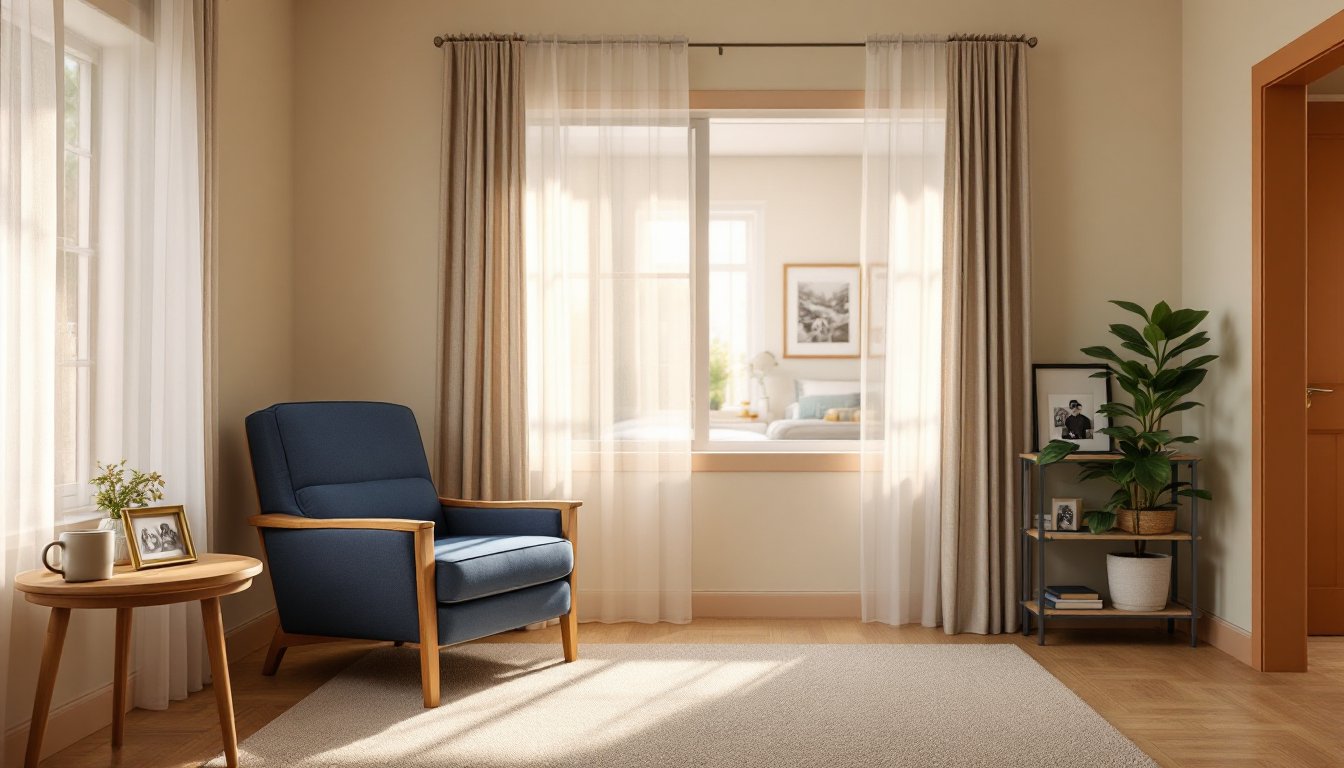
Glare is a common trigger for sundowning and agitation. Install diffusers or frosted covers on overhead lights. Use sheer curtains or cellular shades to soften incoming daylight without blocking it entirely. Natural light regulates circadian rhythms, which often become disordered in dementia.
Sound control matters as much as light. Hard surfaces, tile, hardwood, drywall, amplify noise and confuse auditory processing. Add acoustic ceiling tiles, area rugs, upholstered furniture, and fabric wall panels to absorb sound. White noise machines or soft background music can mask startling noises like HVAC clicks or door slams.
Furniture Selection and Layout Strategies That Support Independence
Furniture should be stable, familiar, and easy to read visually. Avoid glass-top tables (they disappear) or furniture with spindly legs that look fragile. Choose pieces with solid bases, wide seats, and armrests that aid standing and sitting.
Seat height is critical. Standard dining chairs (18 inches) work for most, but avoid low-slung sofas or recliners below 17 inches, they’re difficult to exit without assistance. Firm cushions provide better support than soft, sink-in foam.
High-contrast upholstery helps residents locate seating. A navy chair against a beige wall is easier to see than tonal blending. Avoid busy patterns or stripes that can create optical confusion.
Layout should prioritize clear sightlines and wide pathways. Maintain at least 36 inches of clearance between furniture for walker or wheelchair access, 42 to 48 inches is better. Arrange seating in small clusters (three to four chairs) rather than long institutional rows. This encourages conversation and reduces the overwhelming scale of large rooms.
Anchor activity areas with visual cues. A bookshelf signals a reading nook. A side table with a puzzle defines a quiet corner. Consistency helps: if the blue chair is always by the window, that becomes a reliable reference point.
Avoid furniture on casters or wheels, it shifts unexpectedly and feels unstable. Secure area rugs with double-sided carpet tape or non-slip pads: loose edges are tripping hazards. Better yet, use wall-to-wall carpet with low pile (under ½ inch) for maximum stability.
Creating Meaningful Activity Areas and Social Spaces
Memory care design should invite engagement, not passive sitting. Dedicated activity zones give structure to the day and offer purposeful movement.
Kitchenettes or baking stations tap into procedural memory. Even residents who can’t recall breakfast often remember how to knead dough or wash dishes. Use residential-grade appliances with visible controls (knobs, not touchscreens) and safety shutoffs. Open shelving with labeled bins (“flour,” “sugar”) provides clear visual access.
Gardening areas, whether a raised outdoor bed or an indoor potting bench, offer sensory stimulation and a sense of contribution. Choose non-toxic plants and keep tools lightweight. Raised beds should be 24 to 30 inches high for comfortable standing or seated access.
Memory tables or life-skills stations display tactile objects: fabrics, buttons, vintage tools, photo albums. Rotate items to maintain interest. Keep objects large enough to handle safely (no choking hazards) and avoid anything with small detachable parts.
Social spaces need flexible zoning. Provide quiet nooks for one-on-one conversation alongside open areas for group activities. Use area rugs, bookcases, or half-walls to define zones without blocking supervision.
Avoid clutter, but don’t over-edit. A completely bare environment offers no cognitive stimulation. Strike a balance: rotating displays, seasonal decorations, and accessible materials that invite interaction without overwhelming.
Outdoor access is invaluable when safe. Secure patios or courtyard gardens with fenced perimeters and concealed gates reduce elopement risk while offering fresh air, natural light, and a change of scenery. Use non-slip pavers, wide paths, and shaded seating to accommodate varying mobility levels.
Memory care interior design isn’t a one-time project. It requires observation, adjustment, and empathy. The best environments evolve alongside their residents, offering dignity and autonomy even as abilities change.