

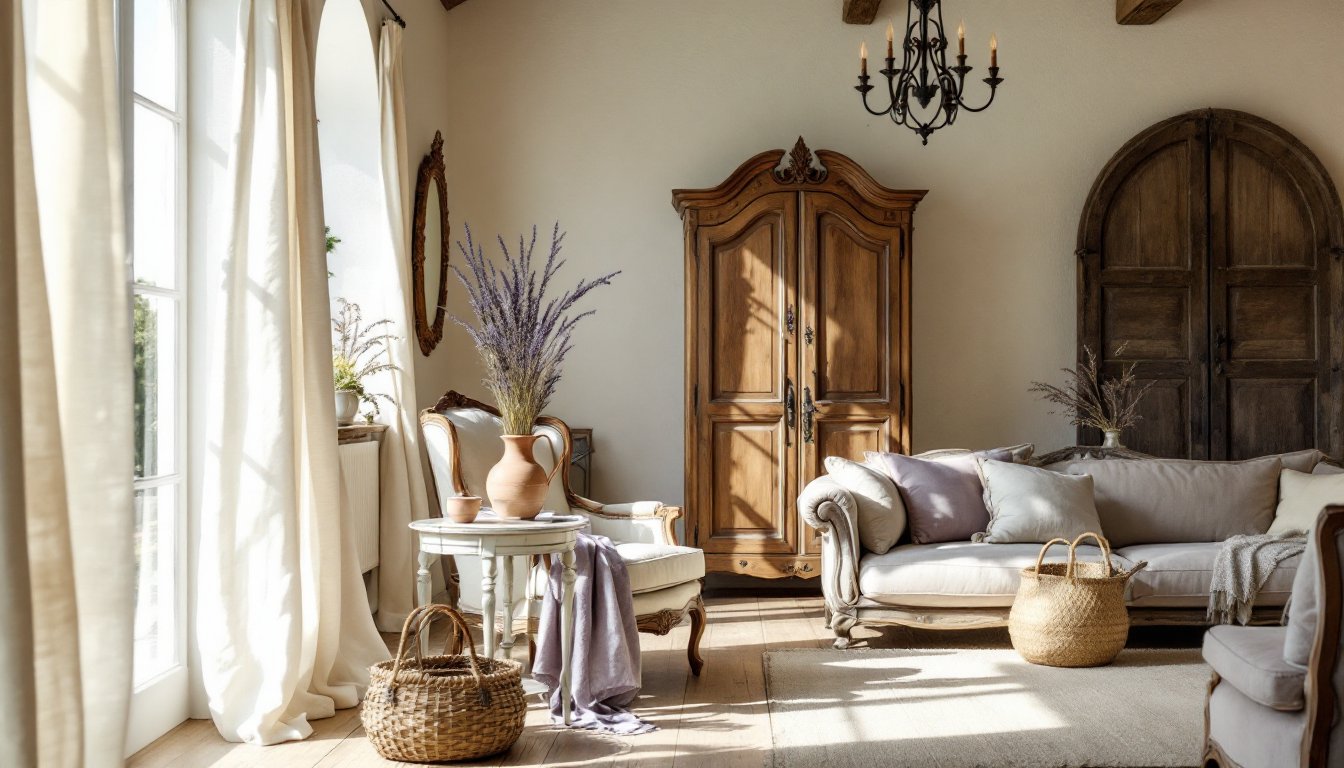
French Provincial Interior Design: The Timeless Guide to Elegant Country Living
French Provincial interior design doesn’t ask homeowners to choose between elegance and comfort. This 17th and 18th-century style, rooted in the rural estates of Provence and Normandy, balances refined French sophistication with the practicality of country living. Unlike the ornate formality of Parisian design, French Provincial trades gilded excess for warm woods, soft linens, and carved details that feel lived-in rather than museum-perfect. It’s a style built for real homes, where aged plaster meets handcrafted furniture, and every piece tells a story. For DIYers and renovators, it offers a forgiving aesthetic: imperfections aren’t flaws, they’re character.
Key Takeaways
- French Provincial interior design balances elegance with comfort by emphasizing natural materials, curved furniture silhouettes, and lived-in character rather than museum-perfect formality.
- Soft neutrals like cream, ivory, and taupe form the foundation of French Provincial color palettes, with accent colors drawn from the Provençal landscape including lavender, sage green, and soft blue.
- Key furniture pieces such as armoires, bergère chairs, farm tables, and wooden bed frames with carved details establish the aesthetic and can be sourced affordably from estate sales, auctions, or secondhand markets.
- Authentic textures—including linen textiles, wide-plank hardwood flooring, textured plaster walls, and wrought iron hardware—are essential to French Provincial style and improve with age rather than looking mass-produced.
- Modern French Provincial adapts successfully for contemporary homes by using natural materials and curved lines while paring down patterns, mixing eras thoughtfully, and incorporating hidden modern amenities.
- Imperfections and signs of wear enhance rather than diminish French Provincial interiors, making the style forgiving for DIYers and budget-conscious homeowners seeking timeless design.
What Is French Provincial Interior Design?
French Provincial interior design emerged from the countryside estates of 17th and 18th-century France, where provincial nobility and wealthy landowners adapted the opulence of Versailles to rural life. The style strips away the heavy gilding and excessive ornamentation of formal French design, replacing it with functional elegance suited to farmhouses, manors, and country homes.
At its core, this aesthetic celebrates craftsmanship over showiness. Furniture features carved details, think cabriole legs, scalloped aprons, and floral motifs, but in simpler forms than their Parisian counterparts. Materials reflect what was locally available: oak, walnut, and fruitwoods rather than exotic imports. Fabrics lean toward linen, cotton, and toile rather than silk brocades.
The style prioritizes livability. Rooms feel airy and light, with tall windows, neutral backdrops, and furniture scaled for comfort rather than ceremony. There’s an inherent warmth to French Provincial spaces, a sense that the home has aged gracefully over generations, accumulating patina and personality along the way. It’s romantic without being fussy, elegant without being cold.
Key Characteristics of French Provincial Style
Several defining elements separate French Provincial from other traditional styles. Architectural features include exposed wood beams (often in darker tones against whitewashed ceilings), stone or terracotta flooring, and arched doorways. Walls typically showcase textured plaster finishes, authentic lime plaster or modern Venetian plaster alternatives, that add depth and age.
Furniture silhouettes favor curves over hard angles. Cabriole legs (the S-shaped leg that curves outward then inward) appear on chairs, tables, and case goods. Armoires serve as focal points, these tall, carved wardrobes originally stored linens and clothing before built-in closets became standard. Hardware stays understated: wrought iron hinges, simple brass pulls, or hand-forged latches.
Layering creates visual interest without clutter. A dining room might pair a carved oak farm table with upholstered bergère chairs, a wrought iron chandelier, and a painted hutch displaying earthenware. Nothing matches too perfectly, the goal is collected-over-time rather than bought-as-a-set.
Natural light plays a critical role. Windows stay largely undressed or use sheer linen panels rather than heavy drapes. When privacy matters, interior shutters or simple café curtains work better than elaborate window treatments.
Color Palettes That Define the French Provincial Look
Soft neutrals form the foundation: cream, ivory, warm white, taupe, and greige. These tones mimic aged plaster, natural linen, and sun-bleached stone. They’re forgiving for DIY paint jobs, imperfect brush strokes and slight color variations enhance the hand-finished look.
Accent colors draw from the Provençal landscape: lavender, sage green, butter yellow, soft blue (think faded shutters), and terracotta. These shades appear in upholstery, pottery, and textiles but rarely dominate entire walls. For painted furniture, chalky finishes in pale blue or gray-green add authentic character. Milk paint or chalk-style paints (like those from specialty paint suppliers) deliver the right matte texture without looking too precious.
Wood tones stay warm and varied, honey oak, walnut, or fruitwood rather than the orange-toned oak of 1990s cabinetry or the gray-washed finishes of farmhouse trends. If refinishing existing furniture, a hand-rubbed oil or wax finish beats glossy polyurethane for period-appropriate sheen.
Essential Furniture and Decorative Elements
Building a French Provincial interior doesn’t require importing antiques from Lyon. Key pieces establish the aesthetic, and many translate well to DIY modifications or secondhand finds:
Furniture pieces:
- Armoires and buffets: Look for pieces with carved detailing, paneled doors, and simple hardware. Vintage finds often need only hardware replacement and a coat of paint or oil to refresh.
- Upholstered seating: Bergère chairs (open-arm chairs with exposed wood frames and cushioned seats/backs), slipcovered sofas, and linen-upholstered dining chairs all fit. Neutral linen or ticking stripe fabrics work better than busy patterns.
- Farm tables: Long, sturdy dining tables in natural wood, rectangular shapes with turned or tapered legs. These take daily use better than delicate pedestal styles.
- Bed frames: Wood frames with curved headboards or upholstered versions in neutral linen. Skip oversized tufted designs: French Provincial keeps headboards understated.
Decorative elements:
- Wrought iron: Chandeliers, wall sconces, curtain rods, and pot racks bring in the hand-forged metalwork common to rural French homes.
- Pottery and earthenware: Confit pots, ceramic pitchers, and stoneware crocks double as functional storage and display pieces.
- Mirrors: Frames in carved wood or distressed painted finishes, nothing too ornate, but not plain either.
- Baskets: Woven willow or wire baskets for storage add texture without visual weight.
- Fresh and dried florals: Lavender bundles, olive branches, or simple wildflower arrangements in ceramic or glass vessels.
Avoid mass-produced distressing. Real French Provincial character comes from actual use and age, or from thoughtful DIY aging techniques like dry brushing, sanding edges naturally, and layering paint colors.
Materials and Textures in French Provincial Interiors
Material selection separates authentic French Provincial from generic “shabby chic.” The style relies on natural, tactile surfaces that improve with age.
Textiles: Linen dominates, for upholstery, bedding, curtains, and slipcovers. It wrinkles naturally (that’s part of the appeal), washes well, and softens over time. Cotton toile (the fabric printed with pastoral scenes in a single color on white or cream) appears in bedding, pillows, and occasionally upholstery. Ticking stripe, the narrow-striped cotton originally used for mattress covers, adds pattern without busyness. Avoid synthetic blends that look too crisp or shiny.
Flooring: Wide-plank wood floors in oak or pine (stained medium-to-warm brown or left natural) provide the traditional base. For authentic character, reclaimed wood flooring works well, the nail holes, grain variation, and uneven patina fit perfectly. In kitchens and entries, natural stone tile (limestone, travertine) or terracotta tile delivers period-appropriate durability. Note: terracotta requires sealing to prevent staining: use a penetrating sealer rated for porous tile.
Wall treatments: Textured plaster beats flat drywall. DIYers can achieve similar effects with skip-trowel techniques using joint compound, or by applying Venetian plaster (requires practice, test on scrap first). For a simpler approach, lime wash paint over drywall creates subtle texture and a chalky, breathable finish.
Wood and metal: Exposed ceiling beams (or faux beams if adding architectural detail) should look hand-hewn rather than perfectly milled. Wrought iron hardware, hinges, handles, light fixtures, adds weight and authenticity. Avoid shiny chrome, brushed nickel, or trendy matte black: oil-rubbed bronze or natural iron fits better.
How to Achieve French Provincial Style in Your Home
Executing French Provincial requires restraint. The style doesn’t shout: it whispers. Start with structural and architectural elements, then layer in furniture and accessories.
Step 1: Establish the backdrop. Paint walls in soft neutrals, warm white or pale taupe. If the budget allows, add texture with a skip-trowel plaster finish or lime wash. Replace modern light switches and outlets with slightly aged brass or bronze covers (code-compliant, UL-listed). Consider crown molding in simpler profiles, nothing too elaborate, just enough to add architectural interest.
Step 2: Address flooring. If replacing flooring, choose wide-plank engineered hardwood (7″ to 9″ widths look more authentic than narrow strips) in oak or hickory with a matte finish. For tile areas, natural stone or terracotta works better than porcelain that mimics stone. If keeping existing flooring, area rugs in natural fiber (jute, sisal) or vintage-style Persian rugs in faded colors bridge the gap.
Step 3: Select key furniture pieces. Start with one or two statement pieces, an armoire, a farm table, or an upholstered bergère chair. Hunt estate sales, auctions, or online marketplaces for solid wood furniture with good bones. Many pieces need only minor repairs: tightening joints with wood glue, replacing worn upholstery, or refinishing surfaces with tung oil or beeswax paste. Don’t over-restore: some wear adds character.
Step 4: Layer textiles and soft goods. Swap synthetic curtains for linen panels (hemmed to just kiss the floor). Use linen or cotton duvet covers in neutral tones, adding a toile throw or striped bolster for pattern. Slipcover existing sofas or chairs in natural linen, pre-washed fabric looks less stiff.
Step 5: Add lighting and hardware. Replace builder-grade light fixtures with wrought iron chandeliers or simple pendant lights with linen drum shades. Swap cabinet hardware for understated brass or iron pulls. In bathrooms, install wall-mount faucets in oil-rubbed bronze if plumbing allows (this may require extending supply lines, call a plumber if you’re not confident soldering copper).
Step 6: Accessorize with restraint. Display a few well-chosen items: a ceramic pitcher filled with lavender, a stack of vintage linens in an open hutch, or a carved wood mirror above a console. Avoid clutter. French Provincial breathes.
Modern French Provincial: Adapting the Style for 2026
French Provincial adapts well to contemporary living without losing its soul. Modern interpretations keep the core principles, natural materials, curved lines, soft palettes, while shedding fussier details.
Pare down pattern. Instead of toile everywhere, use it sparingly, one accent pillow or a single chair. Let texture (linen, plaster, wood grain) provide visual interest instead.
Mix eras carefully. A French Provincial dining table pairs beautifully with modern ghost chairs or sleek metal stools. The contrast highlights both styles. Just avoid too many competing aesthetics in one room.
Update the kitchen. French Provincial kitchens traditionally featured open shelving, farmhouse sinks, and painted cabinetry. In 2026, that translates to Shaker-style cabinets in soft white or pale gray-green, butcher block or marble countertops, and a fireclay apron-front sink. Swap ornate tile backsplashes for simple subway tile or smooth plaster. Install brass or unlacquered bronze faucets that patina over time.
Incorporate modern amenities invisibly. Hide TVs in armoires or behind artwork on motorized mounts. Choose recessed lighting with warm LED bulbs (2700K–3000K color temperature) instead of visible can lights. Smart home tech works fine, just keep the interfaces discreet.
Sustainability aligns naturally. French Provincial’s emphasis on quality, natural materials, and timeless design fights against disposable trends. Buying solid wood furniture, refinishing rather than replacing, and choosing natural fiber textiles all support a lower-impact approach to interiors.
The style’s enduring appeal lies in its flexibility. It accommodates family life, real budgets, and evolving tastes without demanding perfection. A scraped chair, a chipped paint finish, or a well-worn linen cushion don’t ruin the aesthetic, they complete it.