

Small Office, Big Impact: Creative Low-Budget Interior Design Ideas for 2026
Small offices don’t have to feel cramped or uninspiring. With a tight budget and a few square feet, the right design moves can transform a corner desk into a legitimately productive workspace. The trick isn’t throwing money at the problem, it’s understanding how layout, color, and smart material choices play off each other. In 2026, DIY solutions and upcycled finds are more accessible than ever, making professional-looking office design possible without a designer’s fee or a contractor’s invoice. This guide walks through practical, tested strategies that any homeowner or renter can tackle over a weekend.
Key Takeaways
- Smart layout, color, and material choices matter more than square footage—a well-designed small office feels larger and more productive than a cramped one regardless of size.
- Paint is the highest ROI upgrade for low budget office interior design; light neutral walls with an accent wall cost $30–$50 and transform the space in an afternoon.
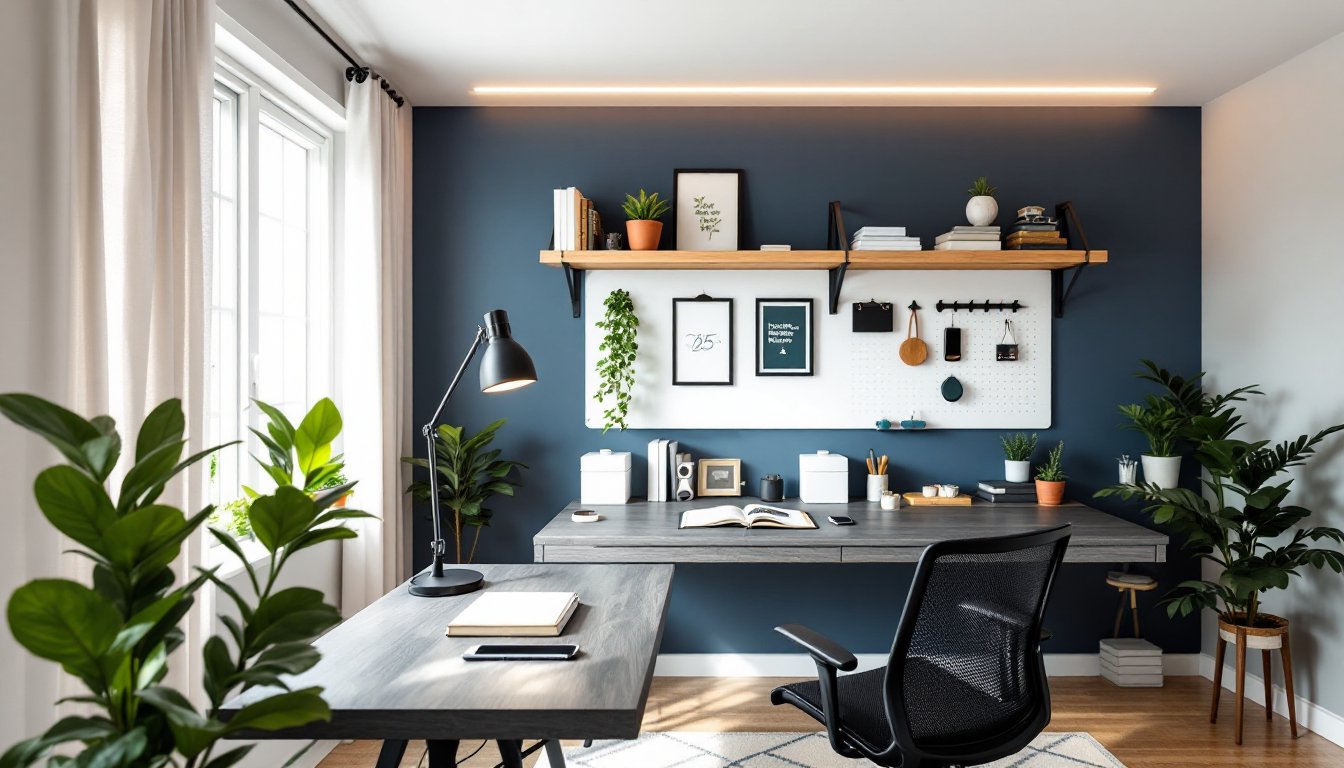
- Maximize vertical space with DIY shelving, pegboard, and floating storage ($20–$90 per wall) to keep desks clear and functional without eating floor area.
- Multi-function and upcycled furniture—refinished thrift-store desks, sawhorse-and-door setups, and stacked crates—deliver professional results for a fraction of new furniture costs.
- Layer three types of lighting (ambient, task, and accent) with budget-friendly LED fixtures ($20–$35 per layer) to eliminate eye strain and create visual depth.
- Cable management, mirrors, and minimal decor—strategic focal points and organized cords—complete the design without clutter, keeping the creative small office environment productive and inspiring.
Why Smart Design Matters More Than Square Footage
Square footage isn’t destiny. A 60-square-foot office that’s poorly laid out will feel tighter than a 50-square-foot space with intentional furniture placement and clear sightlines. The psychology of small spaces is real: clutter multiplies visually, dark corners shrink perception, and poorly scaled furniture dominates the room instead of serving it.
Functional design starts with ruthless editing. Every item in a small office should earn its spot, either by supporting work tasks directly or by improving the user’s focus and comfort. Decorative pieces are fine, but not at the expense of elbow room or storage capacity.
Budget matters less than decision-making. A $40 coat of the right paint will outperform a $400 desk that blocks the window. The goal is to spend where impact is highest: on elements that affect daily usability, light quality, and visual flow. Smart design means identifying those leverage points before opening the wallet.
Budget-Friendly Space Planning Strategies
Start with a scale drawing, graph paper or a free tool like RoomSketcher works fine. Measure the room’s actual dimensions, note window and door swing paths, and mark outlets. This prevents expensive mistakes like buying a desk that blocks the only outlet or a file cabinet that won’t clear the door.
Floating furniture away from walls can counterintuitively make a small office feel larger by creating defined zones. A small desk angled in a corner, with a narrow console or bookshelf behind it, adds depth instead of pushing everything flat against the perimeter.
Multi-function pieces are budget savers. A filing cabinet doubles as a side table or printer stand. A fold-down wall-mounted desk (built from a 3/4-inch plywood sheet and piano hinge, around $35 in materials) disappears when not in use, turning a spare bedroom back into a guest room instantly.
Keep walkways at least 24 inches wide for comfortable movement. In tight quarters, that might mean a narrower desk depth, 24 inches deep instead of the standard 30 inches, but that’s a worthwhile tradeoff for not feeling boxed in.
Maximize Vertical Space with Shelving and Wall Storage
Wall real estate is underused in most small offices. Floor-to-ceiling shelving takes advantage of the full height without eating into usable floor area. A DIY setup using 1×12 pine boards and heavy-duty brackets (rated for at least 50 pounds each) costs roughly $60–$90 for an 8-foot span and holds books, binders, and equipment that would otherwise clutter the desk.
Pegboard is a builder’s friend. A 4×8-foot sheet of 1/4-inch pegboard runs about $20–$25, and mounting it directly to studs with 1-inch furring strips behind provides clearance for hooks. It’s endlessly reconfigurable for tools, charging cables, scissors, and small supplies.
Floating shelves installed above the desk keep references and frequently used items at eye level without the visual weight of a full bookcase. Use hollow-wall anchors rated for 50 pounds if studs aren’t conveniently located, and avoid sagging by keeping spans under 30 inches for 3/4-inch solid wood or plywood.
Creative Color Choices That Transform Small Spaces
Paint is the highest return-on-investment upgrade in a small office. One gallon of quality interior paint (covering roughly 350–400 square feet) costs $30–$50 and can be applied in an afternoon with basic rollers and brushes.
Light, neutral tones, soft whites, warm grays, pale beiges, reflect more light and make walls recede visually. But all-white can feel sterile. Adding a single accent wall in a deeper tone (navy, charcoal, or muted green) creates depth without overwhelming the space. The accent wall works best behind the desk or on the wall opposite the door, drawing the eye and lengthening perceived distance.
Ceiling color matters more than most people realize. Painting the ceiling a shade lighter than the walls, or just using a bright white with high LRV (Light Reflectance Value) above 85, bounces light back down and raises the perceived ceiling height.
Satin or eggshell finishes hold up better than flat paint in high-touch areas, and they’re easier to wipe down when the inevitable coffee splash or fingerprint appears. Skip high-gloss: it highlights wall imperfections and creates glare on screens.
For renters or commitment-phobes, peel-and-stick wallpaper in subtle patterns or textures adds character without the permanence. Expect to spend $30–$60 per roll (covering about 30 square feet), but it removes cleanly and won’t cost a security deposit.
DIY and Upcycled Furniture Solutions
New office furniture adds up fast, but secondhand and DIY options deliver comparable function at a fraction of the cost. Thrift stores, estate sales, and online marketplaces regularly turn up solid wood desks and filing cabinets that just need minor rehab.
A worn desk gets a new life with sandpaper (120-grit followed by 220-grit), a coat of primer, and two coats of satin paint or polyurethane if the original wood is worth showcasing. Total cost for refinishing materials: under $40. The process takes a weekend but yields a custom piece that fits the space and style.
Sawhorses and a solid-core door make a sturdy, spacious desk for around $60–$80. Hollow-core doors are too flimsy: look for solid-core or use a 3/4-inch plywood or butcher block countertop cut to size at the home center. Adjustable sawhorses let users dial in ergonomic height (typically 28–30 inches for seated work).
Industrial pipe shelving built from black iron pipe fittings and reclaimed wood boards has a modern look and costs about $100 for a small wall unit. Pipe is strong, each flange can support significant weight when screwed into studs with 3-inch wood screws.
Crates, vintage suitcases, and wooden boxes stacked or wall-mounted become quirky, functional storage. Secure them to studs to prevent tipping, and line interiors with fabric or contact paper if the raw wood is rough.
Lighting Tricks to Make Your Office Feel Larger
Poor lighting makes small spaces feel even smaller and triggers eye strain during long work sessions. Layer three types of light, ambient, task, and accent, to build depth and functionality without a major electrical overhaul.
Ambient lighting is the base layer. If the existing overhead fixture is a dim builder-grade dome, swap it for a brighter LED flush-mount (15–20 watts LED equals roughly 100-watt incandescent output). Installation is straightforward: turn off the breaker, disconnect the old fixture, and match wire colors (black to black, white to white, ground to ground). If unsure, call an electrician, improper wiring is a fire risk.
Task lighting belongs directly over the work surface. A clamp-on LED desk lamp or an adjustable swing-arm fixture provides focused light exactly where it’s needed without taking up desk real estate. Look for lamps with color temperature around 4000–5000K (neutral to cool white) to reduce eye fatigue.
Accent lighting adds dimension. Battery-powered LED puck lights or adhesive strip lights mounted under shelves or behind the desk create a subtle glow that separates the wall from the furniture, making the room feel layered and larger. Expect around $20–$35 for a set of wireless pucks.
Maximize natural light by keeping window treatments minimal, sheer curtains or top-down bottom-up shades allow light in while maintaining privacy. Avoid heavy drapes that eat into window openings visually.
Affordable Decor and Finishing Touches That Inspire Productivity
Decor in a small office should be deliberate, not cluttered. A few well-chosen pieces set the tone without competing for attention.
Large artwork or a mirror on one wall creates a focal point and visually expands the space. A single framed print or canvas (24×36 inches or larger) has more impact than a gallery wall of small frames in a tight room. Mirrors reflect light and views, effectively doubling perceived depth, mount one opposite a window for maximum effect.
Plants improve air quality and add life without taking up much room. Choose low-maintenance varieties like pothos, snake plants, or ZZ plants that tolerate indoor conditions. Wall-mounted planters or hanging pots keep surfaces clear.
Cork board or fabric bulletin board provides functional wall decor. Build a custom size by wrapping 1/2-inch cork tiles or fabric over a 1/4-inch plywood backer, then frame it with 1×2 pine trim. Materials run about $25–$40, and it keeps papers off the desk.
Cable management might not sound like decor, but visible cords are visual clutter. Use adhesive cable clips, velcro ties, or a cable raceway (plastic channels that mount to the wall or desk edge) to route power and data cables out of sight. Cost: under $15 for a full desk setup.
Finally, a small rug anchors the space and absorbs sound in rooms with hard flooring. A 5×7-foot rug fits under most small office setups and costs $50–$100 in synthetic fibers that hold up to desk chair wheels. Choose low-pile for easier chair movement.